
Singapore Gambling Laws & Player Risks Explained

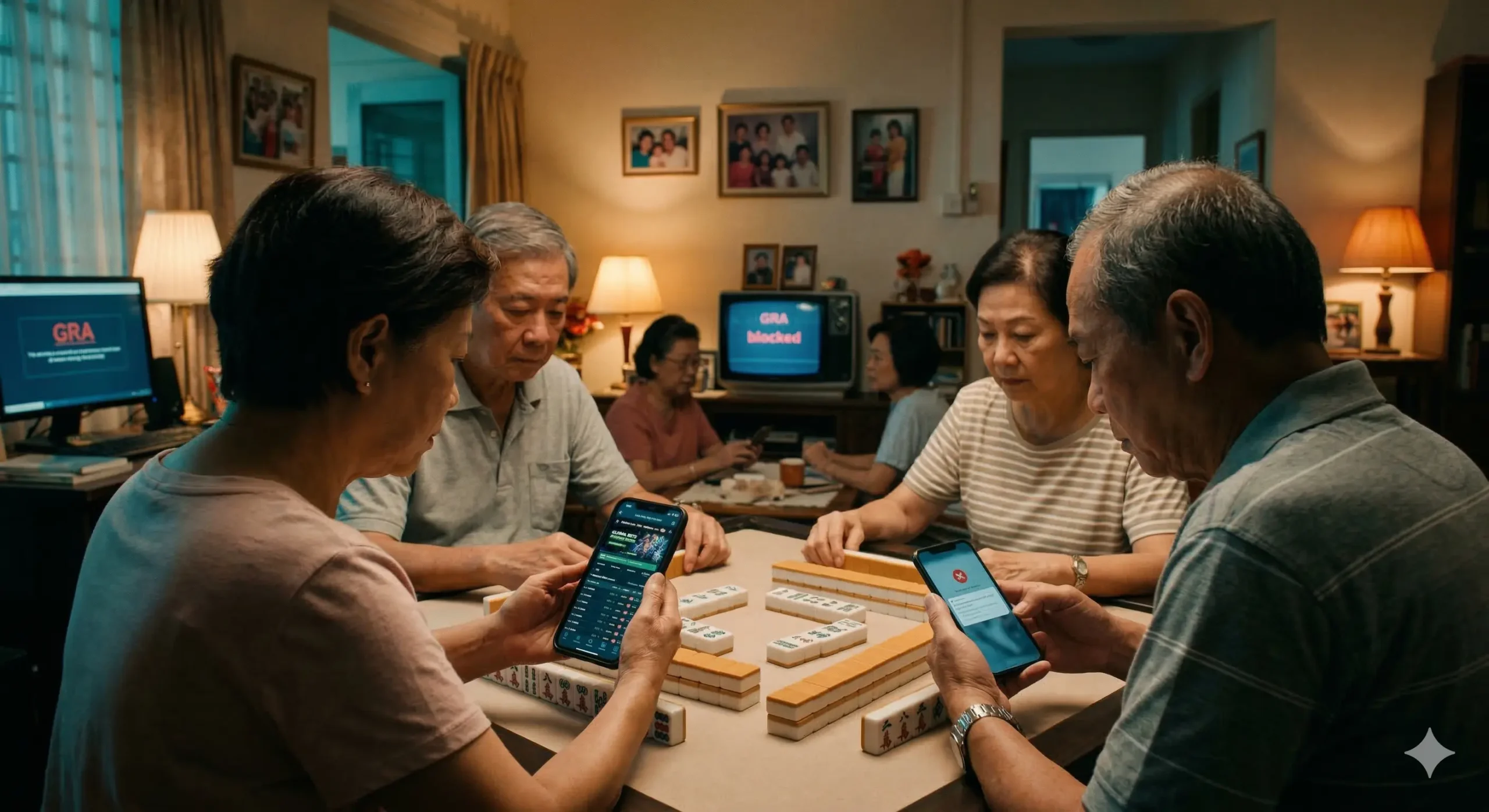
Singapore has one of the most tightly regulated gambling environments in the world. While certain forms of wagering are deeply embedded in local culture — from weekend mahjong sessions to 4D tickets — the law draws precise, unforgiving lines between what is permitted and what is a criminal offense.
For residents, expats, and visitors alike, understanding Singapore gambling laws is not optional. Getting it wrong can mean fines, imprisonment, or both.
The Legal Foundation: Gambling Control Act 2022
The cornerstone of Singapore’s gambling framework is the Gambling Control Act (GCA) 2022, which came into effect on August 2, 2022. This legislation consolidated several older laws — including the Betting Act and the Remote Gambling Act — into a single, modernized framework designed to address everything from casino floors to smartphone apps.
Under the GCA, gambling is broadly defined to include betting, participating in gaming activity, and taking part in a lottery. The fundamental principle is simple: any gambling activity not specifically licensed or explicitly exempted by the government is a criminal offense.
Overseeing this framework is the Gambling Regulatory Authority (GRA), established under the same legislation as the sole technical body responsible for licensing operators, investigating unlawful activity, and protecting consumers from gambling harm.
For the most current regulatory guidance, the Gambling Regulatory Authority of Singapore publishes official licensing conditions, enforcement updates, and consumer advisories.
What Is Legal: Licensed Gambling in Singapore
Legal gambling in Singapore is deliberately limited to a small number of tightly controlled channels.
Licensed Casinos — Only two integrated resort casinos are authorized to operate in Singapore: Marina Bay Sands and Resorts World Sentosa. Both are subject to extensive GRA oversight, mandatory responsible gambling measures, and strict enforcement of the 21-year-old minimum age for entry.
Singapore Pools — The only licensed provider for 4D, Toto, Singapore Big Sweep, football betting, and horse racing. Singapore Pools also holds the sole license to offer remote gambling services, making it the only legal option for online sports betting in the country.
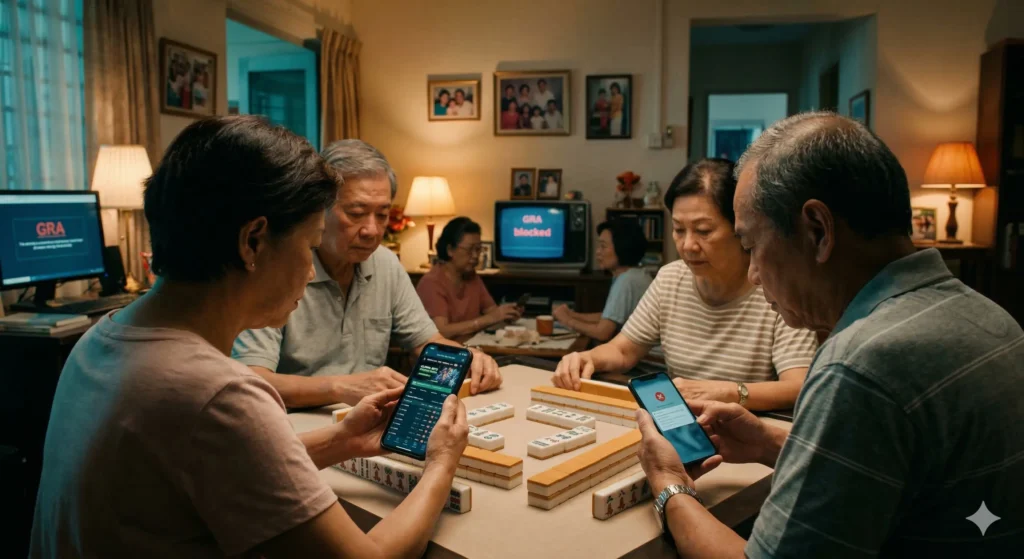
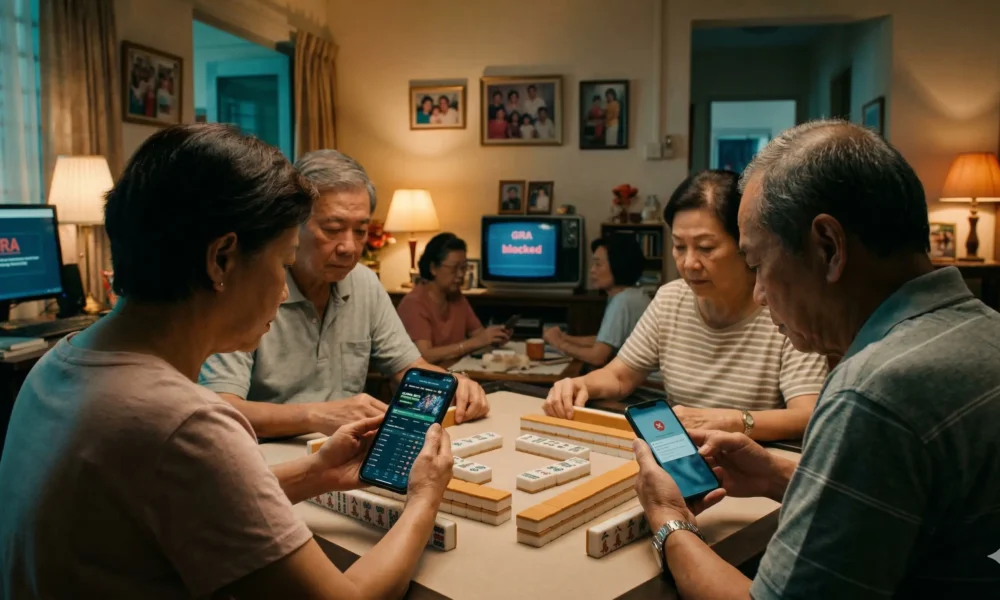
Physical Social Gambling — One of the most significant changes introduced by the GCA 2022 was the formal legalization of social gambling. As of August 1, 2022, gambling among family and friends in a private home is explicitly permitted — but only under strict conditions.
Social Gambling: What the Law Actually Permits
Many Singaporeans welcomed the legalization of social gambling, but the exemption is narrower than it first appears. For a game to qualify as legal social gambling, it must satisfy all three of the following criteria:
1. Physical presence is required. The game must take place in person, inside a private residential home. Void decks, coffee shops, community centers, and any other public or semi-public spaces are strictly off-limits.
2. Personal relationships must exist. Participants must be members of the same family or individuals who genuinely know each other personally. Strangers cannot participate — even by invitation.
3. It must be non-commercial. No participant or host may collect a fee, rake, commission, or any benefit other than their actual winnings from the game itself.
If any one of these conditions is not met, the activity is illegal — regardless of how informal or low-stakes it appears.
Online Gambling: Where the Line Gets Crossed
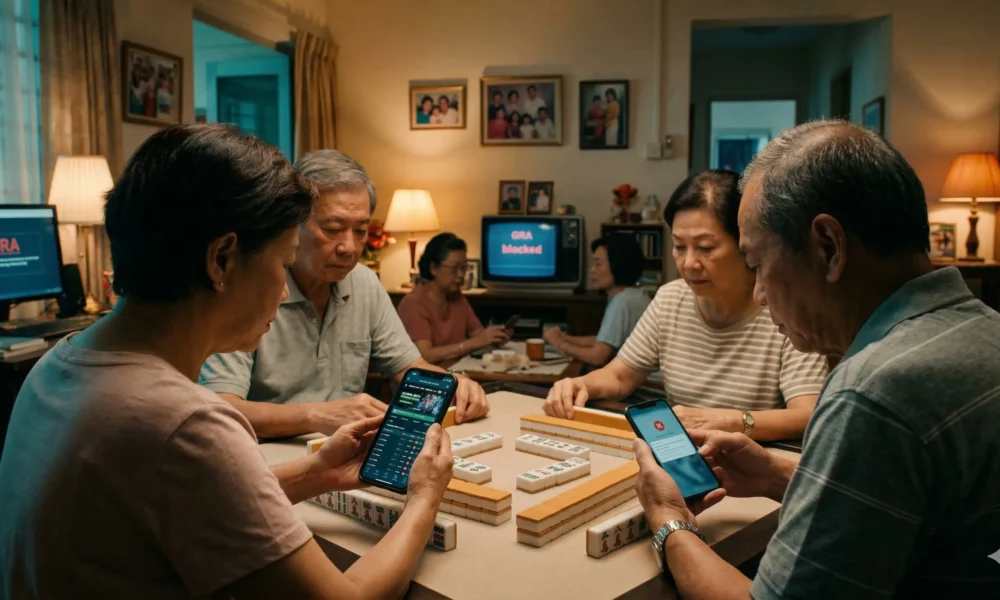
This is where many players unknowingly put themselves at legal risk. The social gambling exemption applies only to physical, in-person activity. Playing mahjong, poker, or any other game via a mobile app or online platform with friends is classified as illegal online social gambling — even if money isn’t changing hands in a traditional sense.
Singapore Pools remains the only operator legally permitted to offer any form of remote gambling. Every other online platform — including international bookmakers and offshore casino sites — is unauthorized under Singapore law.
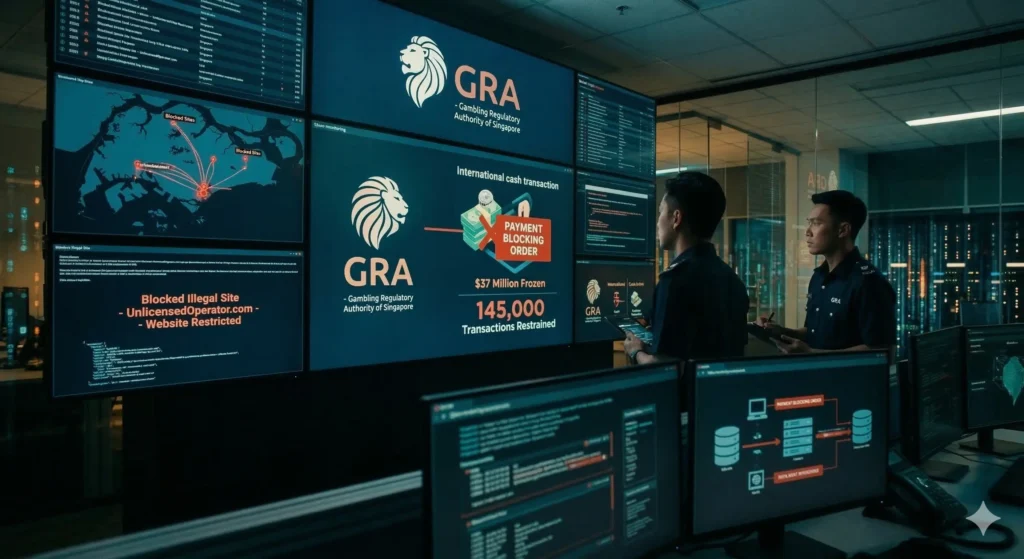
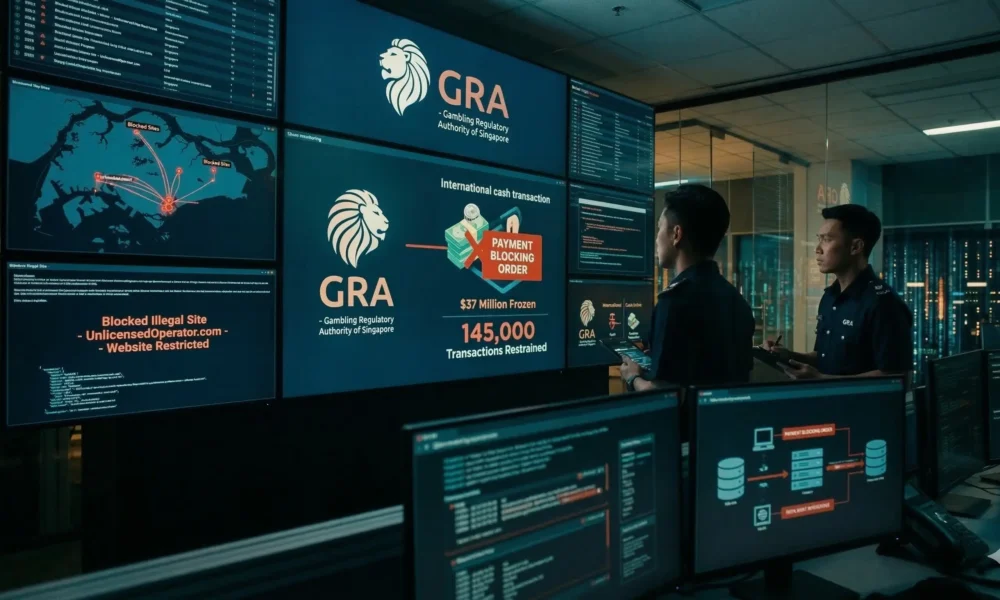
The GRA enforces this aggressively. It has the authority to issue payment-blocking orders to financial institutions, cutting off funds flows to and from illegal platforms, and to coordinate with internet service providers to restrict access to unlawful websites.
The Risks of Using Offshore Gambling Platforms
Players who turn to unlicensed offshore sites face risks that extend well beyond the legal realm.
No legal recourse whatsoever. Offshore operators fall outside Singapore’s jurisdiction. If a platform refuses to pay out winnings, freezes your account, or simply disappears overnight, there is no regulatory body you can appeal to and no mechanism to recover your funds.
Financial disruption. Thanks to the GRA’s payment-blocking orders, deposits to illegal platforms may fail mid-transaction, withdrawals can be frozen, and bank accounts linked to illegal gambling activity may be flagged by financial institutions.
Zero consumer protection. Licensed operators in Singapore must comply with mandatory Know Your Customer (KYC) verification, deposit limits, and self-exclusion tools. Offshore platforms have none of these obligations. The risk of fraud, identity theft, and data exposure is significantly higher.
The GRA has blocked over 3,800 illegal gambling websites and prevented more than 145,000 illegal transactions worth approximately $37 million as of late 2024.
Penalties for Illegal Gambling: Among the World’s Harshest
Singapore’s penalties for gambling offenses are severe by any international standard. Ignorance of the law is not a defense.
For Individual Players (Punters)
Being caught participating in unlawful betting carries a fine of up to $10,000 and imprisonment of up to six months. The severity of actual sentences can exceed what these figures suggest — a 66-year-old cleaner was jailed for two weeks and fined $25,000 for placing illegal bets totaling approximately $125.
For Operators and Facilitators
Running or managing an unlawful gambling place is treated as a far more serious offense. Convictions can result in fines up to $500,000 and seven years in prison. For repeat offenders, penalties escalate to fines of up to $700,000 and ten years of incarceration.
Even being found inside an unlawful gambling premises — as a participant, not an organizer — can result in a $10,000 fine and six months’ imprisonment.
Underage Gambling and Proxy Betting
The minimum legal gambling age in Singapore is 21 years old for casinos and Singapore Pools online accounts. An exception exists for Singapore Pools physical retail outlets, where the minimum age is 18.
The consequences for crossing these lines are severe:
- Minors caught gambling or entering restricted gambling areas face fines of up to $1,500
- Adults who induce minors to gamble, or who place proxy bets on behalf of an excluded individual, face fines up to $300,000 and up to six years in prison
Proxy betting — placing a bet at a casino or via Singapore Pools on someone else’s behalf — is treated as a serious criminal offense, not a technicality.
Emerging Regulations: Loot Boxes and Blind Boxes
Singapore’s regulatory attention has expanded beyond traditional gambling to address the convergence of gaming and wagering in digital products.
Loot Boxes — Currently, virtual loot boxes in video games are not classified as gambling if the rewards have no real-world monetary value. However, if items obtained can be sold or exchanged for money — or money’s worth — the activity crosses into regulated gambling territory.
Blind Boxes and Trading Card Packs — The Ministry of Home Affairs (MHA) and the GRA are actively drafting new regulations expected by mid-2026 to govern physical blind boxes and trading card packs. These products, which involve paying for randomized mystery items, have raised concerns about gambling-like inducement — particularly among children and teenagers. The upcoming framework is expected to include probability disclosure requirements and potentially age-based purchasing restrictions.
How Singapore Protects Vulnerable Players
The National Council on Problem Gambling (NCPG) manages a comprehensive ecosystem of social safeguards designed to protect individuals and families from gambling harm. As of June 2023, there were 341,313 active exclusion orders in Singapore.
Self-Exclusion
Any individual who feels their gambling is becoming problematic can voluntarily apply for Self-Exclusion. This bans the person from accessing Singapore Pools online betting, entering casinos, and visiting jackpot machine rooms. The exclusion lasts a minimum of one year and takes effect immediately.
Family Exclusion Orders
Family members who are experiencing financial or social harm due to a loved one’s gambling can apply for a Family Exclusion Order through the NCPG. Applications for these orders increased by 68% between 2022 and 2023, reflecting both growing awareness of the tool and its real-world utility. The order restricts the individual’s access to licensed gambling venues and platforms.
Exclusion by Law
Certain financially vulnerable groups are automatically excluded from licensed gambling by law. This includes recipients of social assistance, public rental housing tenants, and undischarged bankrupts. The intent is to prevent gambling from compounding existing financial vulnerability.
Digital Access to Support
In October 2022, the NCPG launched a new e-Service portal allowing members of the public to check their exclusion status in real time, submit applications online, and book counseling appointments without visiting a physical office.
For help with problem gambling, the National Council on Problem Gambling (NCPG) operates the National Problem Gambling Helpline at 1800-6-668-668, available around the clock.
Responsible Gambling: Practical Guidance for Players
Staying within the law and within healthy boundaries requires active awareness, not passive luck.
Stick to licensed channels. Singapore Pools and the two integrated resorts are the only legal options. There is no grey zone for “reputable” offshore platforms — they are all unauthorized under Singapore law.
Understand the social gambling rules completely. If you are hosting a mahjong game at home, ensure every participant is someone you personally know, that the game is happening physically inside a home, and that no one is taking a cut of the pot.
Set limits before you start. Singapore Pools requires online account holders to set monthly deposit and betting limits during registration. Use these tools proactively rather than reactively.
Act early on family concerns. The Family Exclusion Order process exists precisely for situations where a loved one’s gambling is causing harm. The NCPG’s e-Service portal makes applying straightforward.
FAQ Section
Is it legal to gamble online in Singapore? Only through Singapore Pools, which is the sole operator licensed for remote gambling services under the Gambling Control Act 2022. All other online gambling platforms, including major international sites, are unauthorized in Singapore. Using them is illegal and carries fines up to $10,000 and up to six months in prison.
Can I play mahjong for money at home with friends? Yes — provided it meets all three criteria for legal social gambling: the game must take place physically in a private home, all participants must personally know each other, and no commission or fee may be charged by the host. Playing mahjong via an app with friends, even informally, remains illegal.
What are the penalties for illegal gambling in Singapore? Individual punters caught gambling illegally face fines up to $10,000 and imprisonment up to six months. Operators of illegal gambling premises face fines up to $500,000 and seven years’ imprisonment. Repeat offenders can be fined up to $700,000 with up to ten years in jail.
Are loot boxes in video games considered gambling in Singapore? Not automatically. Virtual loot boxes are only classified as gambling if the rewards can be exchanged for money or items of monetary value. Purely cosmetic virtual items with no real-world value fall outside the definition. New regulations targeting physical blind boxes and trading card packs are expected by mid-2026.
How do I stop a family member from gambling at casinos? You can apply for a Family Exclusion Order through the NCPG’s e-Service portal at ncpg.org.sg. The order, once granted, restricts your family member’s access to licensed casinos, jackpot machine rooms, and Singapore Pools online betting. You can also call the National Problem Gambling Helpline at 1800-6-668-668 for immediate guidance.
Related Posts


Knowing the law protects you — but so does playing on verified platforms. See which casinos our team has checked for Singapore players: best online casinos Singapore 2026. Each one is assessed for licence, withdrawal speed, and responsible gambling tools.
📝 Editorial transparency: Tested using our published Singapore operator methodology — our seven-stage evaluation framework with documented test methodology, refresh cadence, and named accountability. Read: How We Test Singapore Online Casinos →





 Malaysia Casino Review4 years ago
12Play Casino Review Malaysia 2026 | Get Casino Bonus | SafeGaming
- Singapore Casino Review4 years ago
12Play Review Casino Singapore 2026 | SafeGaming
- Malaysia Casino Review4 years ago
WinClub88 Malaysia 2026: Login Guide, Bonus & Safety
- Malaysia9 months ago
Best Online Casinos in Malaysia 2026 for Real Money
- Singapore Casino Review4 years ago
BK8 Casino Review Singapore 2026 | SafeGaming
- Singapore Casino Review4 years ago
MYBET88 Casino Singapore Review 2026 | SafeGaming
- Singapore Casino Review4 years ago
Maxim88 Casino Review 2026 | Online Casino Singapore
- Malaysia Casino Review4 years ago
QQClubs Casino Review Malaysia 2026 | SafeGaming