
Blackjack Strategy, Bankroll Management & Online Safety Guide


Introduction: Why Strategy Matters More Than Luck
Most casino games are pure gambles. Press a button, watch what happens, hope for the best. Blackjack isn’t like that. Every decision you make—hit, stand, double, split—carries real mathematical weight. Make the right call, and you minimize losses. Make the wrong one, and you’re essentially donating extra money to the casino.
Here’s the uncomfortable truth: two players sitting at the same table, getting the same cards, facing the same dealer, can have completely different results over time. Not because one is luckier. Because one makes better decisions. A player using proper strategy faces roughly a 0.5% house edge. A player making intuitive, gut-feeling decisions? Probably giving up 2-4% or more. That difference compounds viciously over hundreds of hands.
Think about what that means in real terms. Play 100 hands at $10 each—that’s $1,000 wagered. At 0.5% house edge, you expect to lose about $5. At 3% house edge, you expect to lose $30. That’s six times more expensive for the exact same amount of entertainment. Over a year of regular play, that difference becomes hundreds or thousands of dollars.
The good news? Learning optimal blackjack strategy isn’t complicated. It requires some study and practice, but you don’t need a math degree. The basics of how blackjack works from the basics provide the foundation. This guide builds on that foundation with the strategic depth you need to play competently.
Basic Blackjack Strategy (Conceptual Overview)
Basic strategy is a mathematically derived set of rules showing the optimal play for every possible combination of your hand and the dealer’s upcard. It’s not a betting system. It’s not intuition. It’s pure math based on computer simulations of billions of hands.
Mathematicians and computer scientists have calculated the expected value of every decision—hit, stand, double down, split—against every dealer upcard, for every possible player hand. The result? Charts telling you exactly which action produces the best long-term outcome in each situation. Following these charts doesn’t guarantee winning every hand or even every session, but it mathematically minimizes the house edge.
Why do these charts work? Because probability is consistent. When you have 16 and the dealer shows 10, the math is clear: hitting loses less money over time than standing, even though hitting feels dangerous. When you have 11 and the dealer shows 6, doubling down maximizes profit because you’re likely to make a strong hand while the dealer’s in trouble.
Basic strategy accounts for everything: your total, the dealer’s upcard, whether your hand is hard or soft, whether you can double or split. The charts look intimidating at first, but patterns emerge quickly. After some practice, correct plays become automatic.
Why does intuition fail so badly? Our brains aren’t wired for probability. We remember dramatic outcomes more than routine ones. We fear losses more than we value equivalent gains. We see patterns in randomness. We overweight recent experiences. All of these cognitive biases push us toward suboptimal decisions.
For example, most players stand on 12 against a dealer’s 2 or 3 because “I might bust.” That feels safe. But mathematically, you should hit. Why? Because 12 is a terrible hand that loses most of the time regardless. The dealer showing 2 or 3 isn’t as weak as it seems—they’ll make a hand more often than they’ll bust. Hitting 12 improves your overall expectation even accounting for bust risk.
Another common mistake: hitting 16 against dealer 7 because “16 never wins.” Actually, standing is correct. Not because 16 is strong—it’s not. But because hitting 16 busts so often that you lose more money hitting than standing and hoping the dealer busts.
These counterintuitive plays add up. Make the intuitive play instead of the correct play five times per hundred hands, and you might be giving up an additional 0.5-1% in house edge. That’s real money on the table.
The difference between house edge in casino games varies dramatically based on player skill in games like blackjack versus pure chance games. This is why education matters—you actually have leverage here.
Basic strategy is sometimes called “the book” because it’s the textbook answer to every decision. Deviating from the book without extremely good reason (like you’re counting cards and the count justifies deviation) costs you money. Period. Learn the charts, practice until decisions become reflexive, and you’ll be playing optimal blackjack.
Player Actions Explained (Hit, Stand, Double, Split, Insurance)

Understanding each available action and when it makes sense is critical for implementing strategy correctly.
Hit means requesting another card to improve your total. You hit when your current hand is weak and you need to get closer to 21. With hard 11 or less, you always hit—you can’t bust. With hard 12-16, whether to hit depends on the dealer’s upcard. With soft hands under 18, you usually hit because you can’t bust and might improve. The key is knowing when hitting improves your expectation despite bust risk.
Common mistake: standing on 16 against dealer 9, 10, or Ace because “I might bust.” Reality: you’re probably losing that hand anyway. Hitting gives you the best chance at a competitive total, even though you’ll bust sometimes. The math clearly favors hitting.
Stand means keeping your current total and ending your turn. You stand when your hand is strong enough that taking another card risks busting without sufficient upside. With hard 17 or higher, you always stand—the bust risk is too high relative to the marginal improvement potential. With 12-16, standing is correct when the dealer shows 2-6 because they’re more likely to bust.
Common mistake: hitting hard 12-16 against dealer 2-6 because “I need to get closer to 21.” Reality: those dealer upcards are vulnerable. Let them bust themselves. Standing on your weak hand loses less money than hitting and busting.
Double down lets you double your original bet in exchange for receiving exactly one more card and ending your turn. This is attractive when you have a strong starting position against a weak dealer card. Classic double down situations: 11 versus dealer 2-10, 10 versus dealer 2-9, 9 versus dealer 3-6. Soft hands like Ace-6 or Ace-7 versus dealer 3-6 are also strong doubles.
Why double down? Because you’re in a mathematically favorable spot where the extra bet investment has positive expected value. You’re likely to make a strong hand (hitting 11 usually produces 17-21), and the dealer’s in trouble (showing 3-6, they bust frequently). That combination justifies the additional risk.
Common mistake: doubling in unfavorable situations or failing to double in good spots. Doubling 8 versus dealer 6 is wrong—your hand isn’t strong enough. Not doubling 11 versus dealer 6 is also wrong—you’re leaving money on the table by not exploiting the favorable situation.
Split separates a pair into two independent hands, each with its own bet equal to your original wager. The dealer gives each hand a second card, and you play them independently. Some pairs you always split: Aces (two chances at blackjack plus Aces are so versatile) and 8s (splitting turns a terrible 16 into two reasonable hands). Some pairs you never split: 10s (you already have 20—why break up a strong hand?) and 5s (better to keep them as 10 and possibly double).
Why split Aces? Because Aces are the most valuable cards in the deck. Getting two 21s is possible, and even without that, two chances at strong hands beats one mediocre hand. Note that most casinos restrict split Aces to one card each, but it’s still correct to split.
Why split 8s? Because 16 is the worst total in blackjack. You lose with 16 most of the time. Splitting gives you two hands that each start with 8—not great, but better than starting with 16. This play minimizes losses in a bad situation.
Common mistake: splitting 10s because “two chances to win.” Reality: you already have 20, which wins most of the time. Breaking up 20 to chase two inferior hands is terrible strategy. Also, splitting 5s instead of treating them as 10 and doubling in favorable spots.
Insurance is a side bet offered when the dealer shows an Ace. You can wager up to half your original bet that the dealer has blackjack (a 10-value hole card). If they do, insurance pays 2 to 1, which offsets your main bet loss. Sounds protective, right?
Here’s the problem: insurance is mathematically terrible. The dealer has roughly a 30.7% chance of having a 10 in the hole (16 ten-value cards out of 52). But insurance pays 2:1, which implies a 33.3% probability. That gap creates a house edge around 7% on the insurance bet—way worse than the main game.
Even when you have a natural blackjack and the dealer offers “even money” (which is mathematically identical to taking insurance), declining is correct. You win more money over time by declining even money and sometimes pushing than by accepting guaranteed even money payouts.
The only time insurance makes sense is if you’re counting cards and know the remaining deck is rich in 10s—meaning the true probability of dealer blackjack exceeds 33.3%. For basic strategy players not counting cards, insurance is always a bad bet.
Common mistake: taking insurance because it “protects” your hand. Reality: it doesn’t protect anything. It’s a separate bet with terrible odds that loses you money over time. Some players take insurance with strong hands thinking they’re “insuring” their win. You’re not. You’re making a -EV side bet that costs you money long-term.
These five actions—hit, stand, double, split, insurance—are your complete toolkit. Mastering when to use each one separates competent players from those funding the casino’s operations. The difference comes down to studying the situations, understanding the reasoning, and implementing the correct plays consistently.
Many of these mistakes trace back to common casino betting mistakes that players make across various games. Blackjack simply makes them more visible and costly because optimal plays are well-defined.
Bankroll Management for Blackjack Players
Having optimal strategy means nothing if you can’t manage money properly. Bankroll management determines whether you survive variance long enough for good strategy to matter.
Session limits are non-negotiable. Before you sit down, decide exactly how much you’re willing to lose. That number should be money you can afford to part with—money that, if lost, doesn’t affect your rent, food, or other obligations. Once you hit that limit, walk away. No exceptions, no “one more hand,” no chasing losses.
A solid guideline: bring 20-40 times your minimum bet to a session. Playing $10 hands? Bring $200-400. This cushion helps you weather normal losing streaks without going broke prematurely. Blackjack has significant variance—you’ll hit stretches where nothing works despite perfect play. Proper bankrolling ensures those stretches don’t wipe you out before the math catches up.
Also set win goals. Decide in advance what profit level makes you happy—maybe doubling your buy-in. When you reach it, seriously consider leaving. Lock in that profit instead of giving it back. Many players hit nice wins then keep playing until they lose it all. That’s psychological warfare you’ll lose more often than not.
Flat betting versus progressive systems. Flat betting means wagering the same amount every hand. It’s conservative, minimizes volatility, and extends playing time. This is the recommended approach for recreational players because it provides predictable risk exposure and doesn’t require tracking or system adherence.
Progressive betting systems like Martingale sound logical: double your bet after losses, and when you eventually win, you recover all losses plus original profit. The problem? These systems don’t change the underlying house edge. They just redistribute variance in dangerous ways.
Martingale specifically is catastrophic during extended losing streaks. Lose five hands in a row at $10 minimum, and your next bet is $320. Lose six in a row, and you need $640 on the table. One bad run hits table maximums or exhausts your bankroll, and you’ve lost massive money trying to chase small profits. The system fails precisely when you need it most.
Other systems (Fibonacci, d’Alembert, Oscar’s Grind) have similar flaws. They feel like they work during favorable runs and devastate you during unfavorable ones. Unless you’re counting cards and varying bets based on true count, stick with flat betting. It’s boring, but it’s mathematically sound.
Emotional discipline is the hardest part. You’ll have sessions where nothing works. You get dealt 15 and 16 repeatedly while the dealer pulls 20s from nowhere. Basic strategy says hit 16 versus dealer 10, so you do, and you bust. This happens five times in a row. Your brain screams “stop hitting!” But that would be wrong. Variance happens. Short-term results don’t invalidate long-term mathematics.
Conversely, you’ll have sessions where everything clicks. You’re winning hands left and right, and your stack grows rapidly. Euphoria kicks in, bet sizing creeps up, and suddenly you’re playing with money you can’t afford to lose. Then variance corrects, and you give it all back plus your original stake.
Managing emotions requires recognizing these psychological traps before they cost you money. When frustrated, take breaks. Walk away from the table, get coffee, clear your head. When winning big, bank some profit physically—move chips to your pocket or cash out part of your stack. Make it harder to lose everything in one bad sequence.
Understanding safe gambling limits and tools helps you implement protective measures before emotions override logic. Many platforms offer deposit limits, session time limits, and self-exclusion options. Use them. They’re not admissions of weakness—they’re smart risk management.
Finally, understand that member protection policies vary across operators. Choose platforms that take player welfare seriously and provide robust tools for controlling your gambling activity.
Live Dealer vs RNG Blackjack
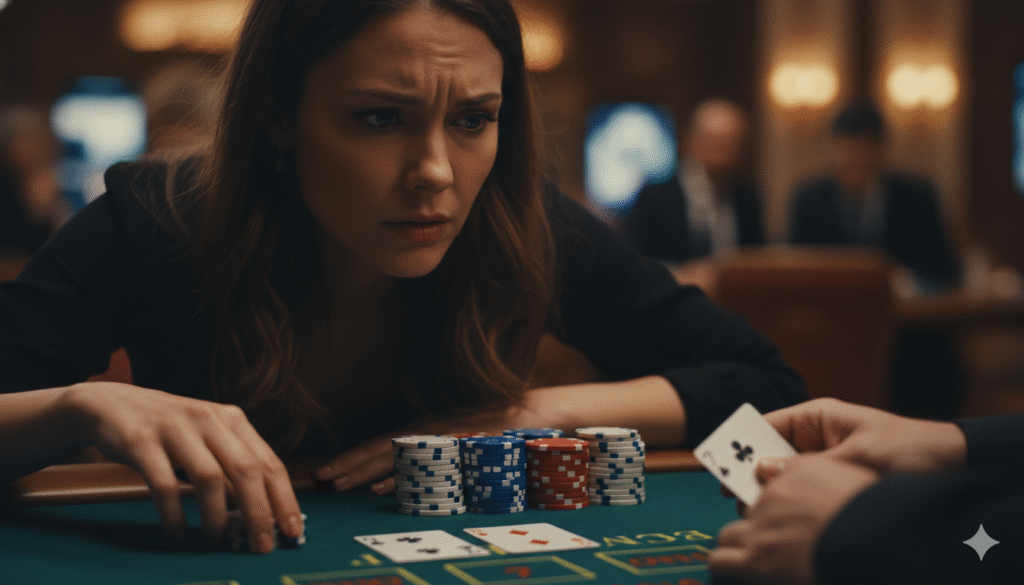
Online blackjack comes in two main formats: live dealer and RNG (Random Number Generator). Each has distinct characteristics affecting your experience.
Live dealer blackjack streams real human dealers from casino studios or actual casino floors straight to your screen. You watch via video feed as a physical person shuffles and deals actual cards. Everything happens with tangible equipment. You make decisions using on-screen buttons, but the game itself is 100% physical. Multiple players can join the same table, though everyone plays against the dealer independently.
The experience closely mirrors being at a brick-and-mortar casino. You see the shuffle, watch the deal, observe other players’ decisions (though those don’t affect your odds), and can often chat with the dealer. This transparency appeals to players who want visual confirmation that cards are being dealt fairly rather than trusting software.
Live dealer disadvantages? Speed. Physical dealing takes time. You’re looking at 30-50 hands per hour versus 200+ hands in RNG games. If you’re playing to maximize comps or want high-volume action, live dealer frustrates you. Also, table minimums tend to be higher ($5-$25 typical) compared to RNG games where $1 minimums exist.
RNG blackjack is entirely digital. Software algorithms simulate shuffling and dealing with no physical cards involved. Reputable operators use certified RNG systems tested by independent auditing companies like eCOGRA, iTech Labs, or Gaming Laboratories International. These systems produce truly random outcomes that match the probabilities of physical decks.
The advantage is speed and convenience. Hands complete in seconds. You can play multiple hands simultaneously. Table minimums are lower. You control the pace—sit and think as long as you want, or blast through hands rapidly. For players who want maximum efficiency, RNG games deliver.
The disadvantage is trust. You’re relying on software you can’t see or verify. While licensed casinos use legitimate RNG systems, some players feel uncomfortable trusting an algorithm versus watching physical cards. This is mostly psychological—properly certified RNG is just as fair as live dealer—but psychology matters in gambling.
Which should you choose? Depends on your priorities. Value authenticity, atmosphere, and visual confirmation? Go live dealer. Value speed, convenience, and lower minimums? Go RNG. Both are fair at licensed operators.
One critical consideration: avoid operators using uncertified or proprietary RNG systems without independent testing. Licensed casinos using live casino software providers like Evolution Gaming, Playtech, or Ezugi, or certified casino software providers for RNG games, ensure game fairness through third-party audits and regulatory oversight.
Is Blackjack Legal & Safe to Play Online?
Legality and safety are separate concerns, both critical before risking money.
Licensing matters more than anything else. Licensed casinos operate under strict regulatory oversight protecting players. Licensing authorities—UK Gambling Commission, Malta Gaming Authority, Curacao eGaming, state gaming boards in the US—require casinos to maintain fair games, protect customer funds in segregated accounts, prevent money laundering, implement responsible gambling tools, and undergo regular audits.
Licensed operators display their license information prominently, usually in the website footer. Look for license numbers and issuing authorities. Verify this information independently by checking the regulator’s website. If a casino doesn’t clearly display licensing, assume it’s unlicensed and avoid it.
Unlicensed casinos are dangerous. You have zero recourse if they refuse payouts, manipulate games, or simply disappear with your deposits. No regulatory body will help you. No legal mechanism exists for recovering funds. You’re gambling twice—once on the games, once on whether the operator is honest. Don’t take that risk.
Regional legality varies dramatically. Online gambling is fully legal and regulated in many jurisdictions: UK, most European countries, some Canadian provinces, several US states (New Jersey, Pennsylvania, Michigan, West Virginia, Connecticut, Delaware). In these places, playing at licensed operators is completely legal.
Other regions have ambiguous or restrictive laws. Some prohibit online gambling but don’t prosecute individual players. Others ban it entirely and could theoretically prosecute players, though enforcement is rare. Some allow only certain types of gambling (poker or sports betting) while prohibiting casino games.
Know your local laws before playing. Claiming ignorance doesn’t protect you legally. If online casino gambling is prohibited in your jurisdiction, offshore unlicensed sites don’t make it legal—they just make it riskier because you lack legal protections.
Why unlicensed casinos are risky. Beyond legality, unlicensed operators present multiple dangers. Games might be rigged. Withdrawal requests might be denied arbitrarily. Customer funds might not be segregated, meaning if the casino goes bankrupt, your money disappears. Personal information might be mishandled or sold. Payment processing might be insecure.
Licensed operators face severe penalties—including losing their license—for these behaviors. Unlicensed operators face no consequences because they operate in legal gray areas or outright illegal jurisdictions. The small savings from better bonuses or reduced verification requirements isn’t worth the risk of losing your entire balance.
Understanding how we rate online casinos provides insight into the criteria separating legitimate operators from questionable ones. Licensing, game fairness, payment reliability, customer service, and complaint resolution all factor into trustworthiness assessments.
If problems arise, legitimate operators have formal member complaint resolution processes that provide structured escalation paths for disputes. Unlicensed sites offer no such protections.
Common Blackjack Myths Debunked
Several persistent myths about blackjack mislead players and cost them money. Let’s correct these.
“Blackjack is rigged.” Licensed casinos don’t rig blackjack because they don’t need to. The house edge already guarantees profit over time. Rigging games would risk their gaming license, expose them to massive legal liability, and destroy their reputation. The risk-reward doesn’t justify it when the math already favors the house.
Physical casinos can’t rig dealing without dealers cooperating, which creates liability and detection risk. Online casinos using certified RNG systems undergo regular audits verifying randomness and proper odds. Independent testing agencies examine millions of hands ensuring outcomes match expected probabilities.
The perception of rigging stems from normal variance combined with poor strategy. When you’re making suboptimal decisions and experiencing negative variance simultaneously, results feel rigged. They’re not. You’re just playing badly during an unlucky stretch.
“Dealers always win.” Statistically, players win about 43% of hands, lose 48%, and push 9%. That 5% gap creates the house edge, but it’s far from “dealers always win.” You’ll win plenty of hands. The slight statistical disadvantage multiplied across hundreds of hands produces the casino’s profit.
This myth persists because we remember losses more vividly than wins. Losing $100 stings more than winning $100 feels good. Dropping three hands in a row sticks in memory more than winning two. This cognitive bias distorts perception, making dealer wins seem more frequent than they actually are.
“Card counting is illegal everywhere.” Card counting—mentally tracking the ratio of high to low cards remaining—is completely legal everywhere. It’s a skill involving memory and arithmetic, not cheating. You’re using publicly visible information (cards already dealt) to adjust strategy. No laws prohibit this.
However, casinos are private property and can refuse service to anyone for any legal reason. If identified as a card counter, you’ll be asked to leave or banned from playing blackjack. Casinos employ various countermeasures: frequent shuffling, cutting off significant portions of the shoe, using continuous shuffling machines, or simply banning suspected counters.
Counting is legal, but casinos protecting their profits by excluding advantage players is also legal. If you count cards successfully, expect heat and eventual ejection. It’s not illegal—it’s just playing a game the casino no longer wants to play with you.
“Side bets are profitable.” Side bets like Perfect Pairs, 21+3, Royal Match, or Lucky Ladies offer flashy payouts for specific card combinations. They look tempting with those big potential returns. The reality? House edges typically run 2-8% or higher—dramatically worse than the main game.
These bets are designed to extract additional money from players attracted to big payouts. You’ll hit one occasionally and get excited, but over time they’re money drains. The high payouts don’t compensate for how rarely they hit. If minimizing house edge matters to you, avoid side bets entirely and focus on playing the main game correctly.
Modern Blackjack Trends & Future Outlook

The blackjack landscape continues evolving with technology and regulation.
Live dealer blackjack has exploded in popularity. Technology improvements—HD streaming, multiple camera angles, professional dealers, sophisticated software—create experiences rivaling physical casinos. Players get authenticity and social elements while maintaining home convenience. Operators continue investing in studio expansion, specialized tables (VIP limits, unique variants, themed environments), and enhanced features (chat, statistics, bet-behind options). This trend shows no signs of slowing.
Mobile-first design dominates. Smartphones are now the primary access point for online blackjack. Operators design games specifically for mobile rather than adapting desktop versions. Simplified interfaces optimized for touchscreens, full functionality, excellent graphics, smooth performance. Playing blackjack during commutes, lunch breaks, or from your couch has democratized access and driven substantial growth. Expect continued mobile optimization with features like biometric authentication, push notifications, and deeper integration with mobile payment systems.
Regulatory expansion continues. More jurisdictions are legalizing and regulating online gambling instead of maintaining prohibition. Governments recognize that players will gamble online regardless—prohibition just pushes them toward unregulated offshore operators. Legalization provides consumer protections, generates tax revenue, and creates legitimate industry structures.
Regulators increasingly demand transparency around RTP percentages, responsible gambling tools, player fund protection, and advertising standards. This benefits players through safer environments and gives the industry legitimacy. Expect more regions to follow this regulatory trend.
Technology and compliance intersect. AI monitors for problem gambling behaviors, flagging players showing concerning patterns. Blockchain technology offers transparent, verifiable fairness in some implementations. Enhanced identity verification and KYC procedures combat underage gambling and money laundering, though they create friction for legitimate players. VR blackjack exists but remains niche.
Understanding AI impact on online gambling helps contextualize these technological shifts. AI improves both player protection and operator fraud detection, creating safer environments overall.
Balancing security, compliance, and user experience remains challenging. Overly burdensome verification alienates players. Insufficient security creates vulnerability. Finding optimal middle ground requires ongoing adjustment as threats evolve and technology improves.
The future likely involves more regulation, better player protections, enhanced mobile experiences, and continued live dealer growth. These trends generally favor players through increased transparency and safety, though they may reduce certain fringe benefits (extreme bonuses, loose verification) that were possible in less-regulated environments.
Final Thoughts + Cross-Link Back
You now understand not just how blackjack works, but how to play it strategically. Basic strategy provides optimal decisions for every situation. Bankroll management prevents emotional decisions from destroying your funds. Understanding live dealer versus RNG helps you choose appropriate platforms. Knowing what makes online play safe protects you from predatory operators.
But strategy means nothing without understanding the foundation it’s built on. If you haven’t already, read our guide on learning blackjack rules and odds from the start to ensure you understand card values, dealer mechanics, payout structures, and why house edge varies based on rules. Strategy and fundamentals work together—neither is sufficient alone.
The difference between winning and educated players versus losing casual players comes down to knowledge application. You can’t control what cards get dealt. You can control how you respond to them. Make optimal decisions consistently, manage your bankroll responsibly, and choose legitimate platforms offering fair games. Do these things, and you’re playing blackjack the way it should be played: strategically, safely, and sustainable
Frequently Asked Questions (FAQ)
Yes. Unlike pure chance games such as slots or roulette, blackjack allows players to influence outcomes through correct decision-making. Using basic strategy reduces the house edge significantly compared to guessing or playing by intuition.
The best approach is basic blackjack strategy, which provides mathematically optimal decisions for every possible hand based on your cards and the dealer’s upcard. Beginners should focus on learning when to hit, stand, double down, and split rather than relying on betting systems.
No. Blackjack strategy does not guarantee profits or eliminate losses. It minimizes expected losses over time by reducing the house edge. Short-term results can still vary due to normal variance.
With perfect basic strategy, the house edge in blackjack is typically around 0.5%, depending on game rules. Poor strategy can increase this to 2–4% or more, making correct play critical.
Absolutely. Even perfect strategy cannot protect you from short-term losing streaks. Proper bankroll management helps prevent emotional betting, protects against variance, and ensures you don’t lose more money than you can afford.
A common guideline is 20–40 times your minimum bet. For example, if you play $10 hands, a session bankroll of $200–$400 helps absorb normal swings without going broke too quickly.
📌 Sharpen your game at licensed sites: Browse best online casino Malaysia 2026 for platforms offering demo and live blackjack. Compare fastest payout casino Malaysia for quick cashouts when you win.
📝 Editorial transparency: Evaluated using our published live casino methodology — our seven-stage evaluation framework with documented test methodology, refresh cadence, and named accountability. Read: How We Test Live Dealer Casinos →



 Malaysia Casino Review4 years ago
12Play Casino Review Malaysia 2026 | Get Casino Bonus | SafeGaming
- Singapore Casino Review4 years ago
12Play Review Casino Singapore 2026 | SafeGaming
- Malaysia Casino Review4 years ago
WinClub88 Malaysia 2026: Login Guide, Bonus & Safety
- Malaysia9 months ago
Best Online Casinos in Malaysia 2026 for Real Money
- Singapore Casino Review4 years ago
BK8 Casino Review Singapore 2026 | SafeGaming
- Singapore Casino Review4 years ago
MYBET88 Casino Singapore Review 2026 | SafeGaming
- Singapore Casino Review4 years ago
Maxim88 Casino Review 2026 | Online Casino Singapore
- Malaysia Casino Review4 years ago
QQClubs Casino Review Malaysia 2026 | SafeGaming