
Blackjack Variants Compared: Rules, Odds & Popularity

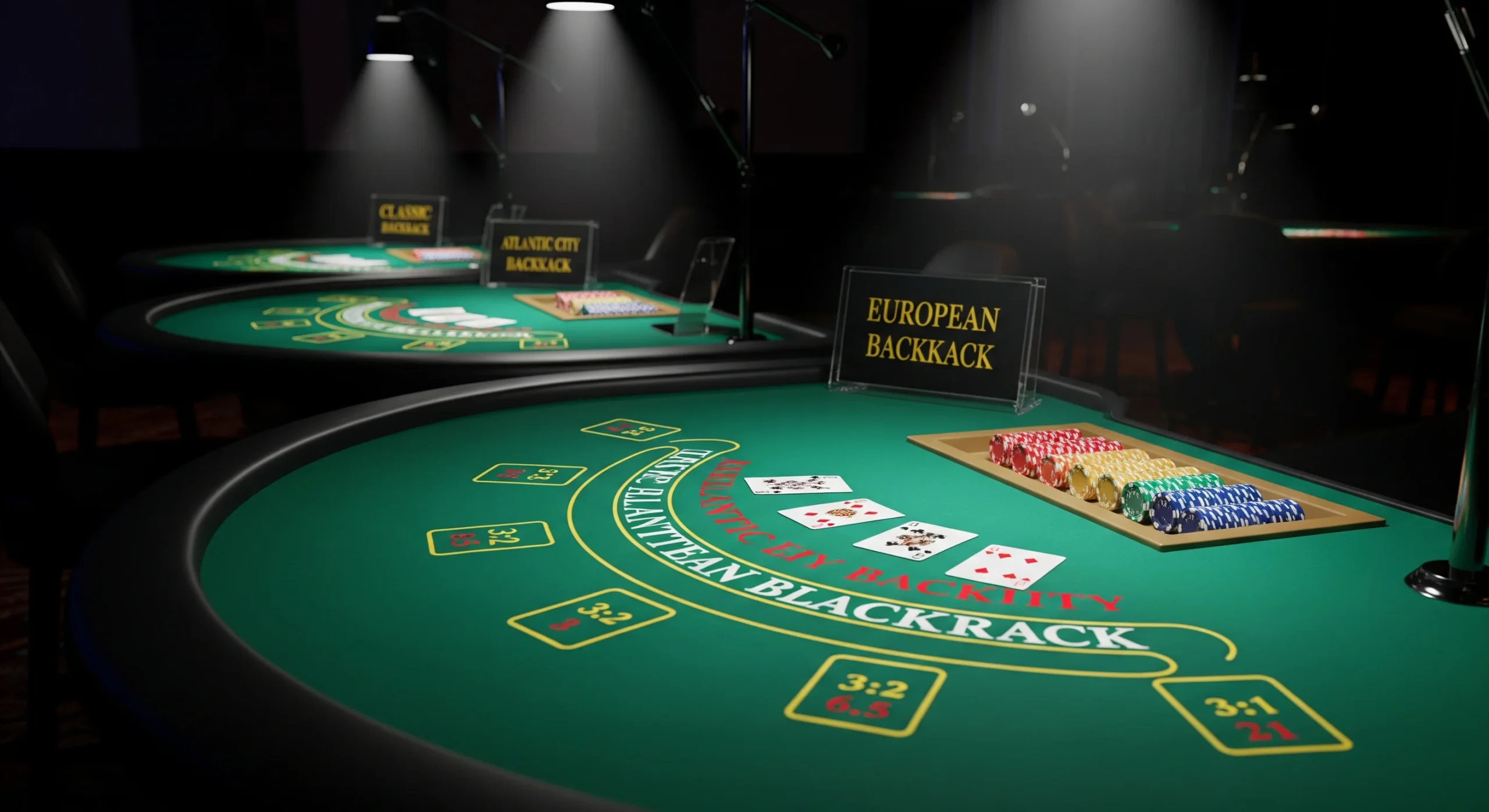
Blackjack isn’t just one game—it’s a family of variants, each with distinct rules that dramatically affect your chances of winning. While the core objective remains the same across all versions (beat the dealer without exceeding 21), the subtle differences in dealer behavior, payout structures, and player options can shift the house edge by more than 2%.
For players in Malaysia and Singapore, understanding these variants is crucial because online casinos often mix favorable and unfavorable versions side by side. You might find classic blackjack with a 0.5% house edge next to a variant that gives the casino a 2% advantage—and both tables look nearly identical at first glance.
This comparison breaks down the most popular blackjack variants available online, examining their specific rules, mathematical odds, and why certain versions have become player favorites while others remain niche options. Whether you’re choosing your first blackjack table or refining your game selection strategy, knowing these differences will directly impact your bankroll and long-term results.
Classic Blackjack: The Foundation
Classic blackjack serves as the baseline against which all other variants are measured. This is the version most players learn first, and its rules have remained remarkably consistent across decades and continents.
Core Rules
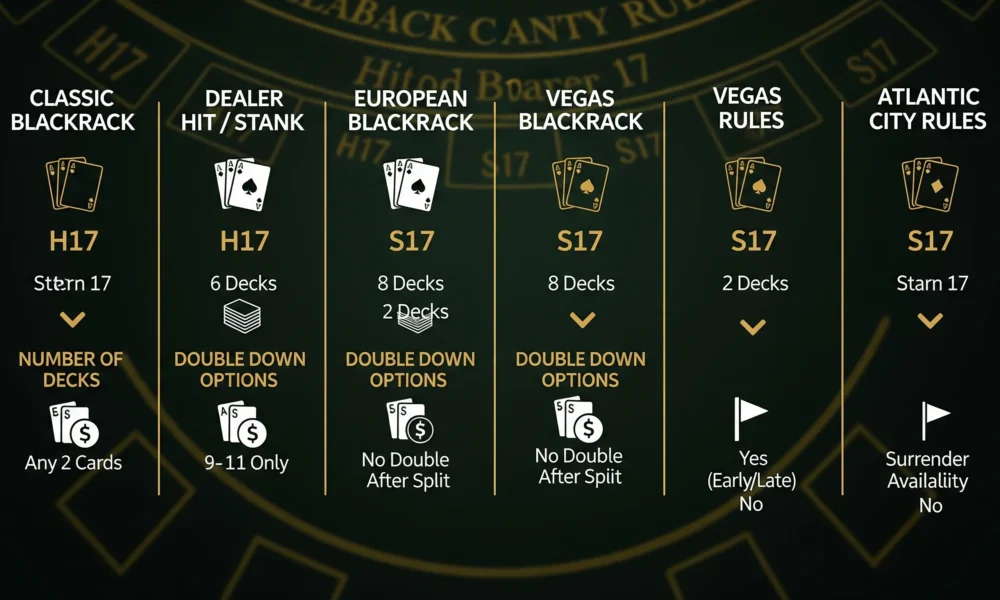
In classic blackjack, the dealer stands on all 17s (both soft and hard), players can double down on any two cards, and splitting is allowed on pairs with the option to resplit up to three times in most games. Blackjack pays 3:2, insurance is available when the dealer shows an ace, and surrender options vary by casino.
The game typically uses 4–8 decks shuffled together in a shoe, with cards dealt face-up to players and one dealer card exposed. The dealer checks for blackjack when showing an ace or ten-value card before players complete their hands.
House Edge
With optimal basic strategy, classic blackjack offers a house edge between 0.40% and 0.60%, depending on the exact number of decks and minor rule variations. This makes it one of the lowest house edge games in any casino, online or land-based.
Popularity
Classic blackjack remains the most widely played variant globally. Its straightforward rules, favorable odds, and decades of established strategy make it the default choice for both recreational and serious players. Nearly every licensed online blackjack casino features at least one classic blackjack table, and many operators build their entire blackjack section around variations of this format.
European Blackjack: Subtle But Significant Changes
European blackjack emerged as casinos on the continent developed their own house rules, creating a variant that looks nearly identical to classic blackjack but contains one critical difference that affects strategy.
Key Rule Differences
The defining characteristic of European blackjack is that the dealer receives only one card initially and doesn’t check for blackjack until after players complete their hands. This means you can double down or split against a dealer’s ace or ten, only to lose those additional bets if the dealer reveals a blackjack.
Most European blackjack games also restrict doubling to hands totaling 9, 10, or 11, and some versions limit splitting to once per hand rather than allowing resplits. The game typically uses two decks rather than the 4–8 decks common in American-style games.
House Edge Impact
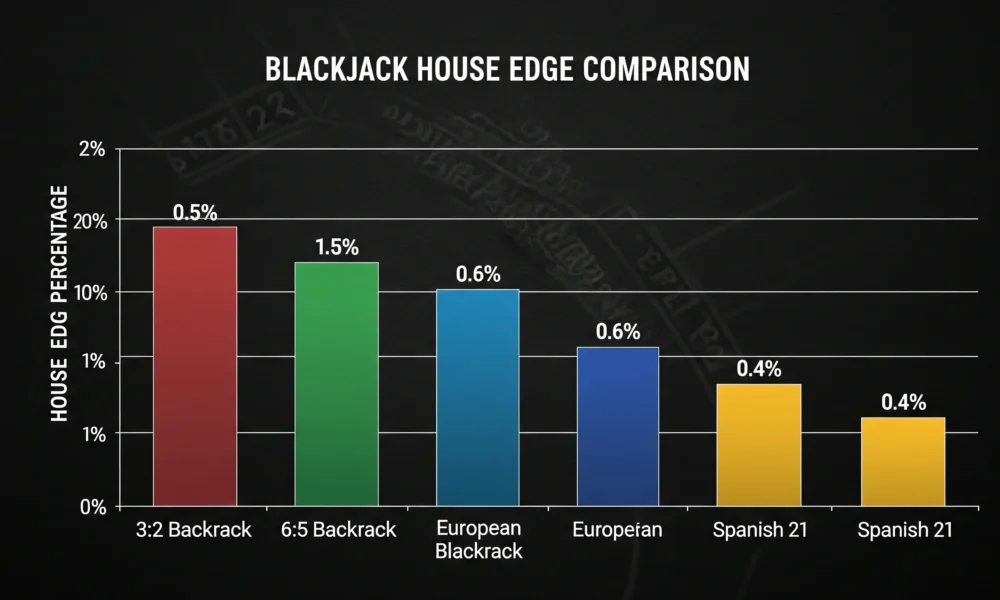
The no-hole-card rule and doubling restrictions increase the house edge to approximately 0.62–0.72% with perfect play. This might seem like a small difference from classic blackjack’s 0.40–0.60%, but over thousands of hands, that extra 0.20–0.30% compounds significantly.
Strategic Adjustments
Basic strategy shifts slightly for European blackjack. Since you risk additional bets when doubling or splitting against dealer tens and aces, you’ll double and split less frequently than in classic blackjack. For instance, you should never double down on 11 against a dealer ace in European blackjack, whereas this is often the correct play in classic versions.
Popularity
European blackjack enjoys moderate popularity, particularly among players familiar with land-based European casinos. However, when given the choice between classic and European variants with similar betting limits, most informed players prefer classic blackjack due to the better odds. For those exploring different rule structures, understanding types of blackjack games explained classic European Vegas provides deeper insight into how these variations evolved.
Vegas Strip Blackjack: The Player-Friendly Standard
Vegas Strip blackjack represents the ruleset commonly found in major Las Vegas casinos on the famous Strip. This variant is specifically designed to offer competitive odds while maintaining casino profitability through higher table limits.
Defining Characteristics
Vegas Strip blackjack uses four decks, allows doubling on any two cards, permits doubling after splitting, allows resplitting up to four hands (except aces), and features the dealer standing on all 17s. The dealer checks for blackjack before players act, and blackjack pays the standard 3:2.
Late surrender is sometimes available, allowing you to forfeit half your bet against particularly unfavorable dealer upcards. This option, when offered, provides additional strategic flexibility that reduces the house edge.
House Edge Advantage
Vegas Strip blackjack offers one of the lowest house edges in casino blackjack, typically ranging from 0.35% to 0.45% with correct basic strategy. The combination of favorable doubling rules, resplit options, and dealer standing on soft 17 creates multiple player advantages.
Why Players Prefer It
The liberal doubling and splitting rules create more opportunities for strategic play and potential profit. Players can capitalize on favorable situations more effectively than in restrictive variants. Many 3:2 blackjack tables online use Vegas Strip rules precisely because this variant has earned a reputation for fairness and player value.
Availability
Vegas Strip blackjack is extremely common in online casinos targeting international players. The variant’s reputation and mathematical fairness make it a marketing advantage for operators who want to attract serious blackjack players.
Atlantic City Blackjack: East Coast Alternative
Atlantic City blackjack emerged from New Jersey’s regulatory framework, which mandated certain player-favorable rules to compete with Las Vegas. This variant offers some of the best odds in casino blackjack when the full ruleset is implemented.
Rule Structure
Atlantic City blackjack uses eight decks, allows late surrender, permits doubling after splitting, allows resplitting up to three times, and features the dealer standing on all 17s. The dealer checks for blackjack before players act, and insurance is available.
The critical difference from Vegas Strip is the availability of surrender and the use of eight decks instead of four. Surrender allows you to forfeit half your bet against particularly strong dealer hands, which provides a mathematical advantage in specific situations.
House Edge Benefits
With the full Atlantic City ruleset, the house edge drops to approximately 0.35–0.43% with optimal play. The surrender option alone reduces the house edge by about 0.08% when used correctly, making this one of the most player-friendly variants available.
Strategic Complexity
Atlantic City blackjack introduces additional strategic decisions through the surrender option. Knowing when to surrender requires understanding not just basic strategy but also the specific mathematical thresholds where surrendering becomes more profitable than playing the hand.
Finding Atlantic City Games
While not as universally available as classic or Vegas Strip blackjack, Atlantic City rules appear frequently at blackjack sites with fair rules that prioritize player value over maximum house edge. The variant appeals particularly to experienced players who appreciate the strategic depth surrender adds.
Spanish 21: High Volatility, High Reward
Spanish 21 represents a radical departure from traditional blackjack, removing all 10-value cards from the deck and compensating with liberal rules and bonus payouts. This creates a game with dramatically different mathematics and strategy.
Unique Rule Set
Spanish 21 removes all four 10s from each deck (leaving jacks, queens, and kings), uses 6–8 Spanish decks of 48 cards each, pays bonuses for specific hands like 21 with five or more cards, offers 3:2 on blackjack (some versions pay 6:5), allows doubling any number of cards, permits doubling after splitting, allows resplitting aces, and gives players automatic wins on 21 regardless of dealer’s hand.
The bonus payouts create unusual situations where certain multi-card 21s pay 2:1 or even 3:1. A five-card 21 pays 3:2, a six-card 21 pays 2:1, and a seven-card 21 pays 3:1. A 6-7-8 or 7-7-7 of mixed suits pays 3:2, same suits pay 2:1, and all spades pay 3:1.
House Edge Reality
Despite the liberal rules and bonus payouts, removing the 10s increases the house edge significantly. With perfect Spanish 21 strategy, the house edge ranges from 0.40% to 0.80% depending on the specific rules and number of decks.
The game feels more volatile than classic blackjack because the removal of 10s makes blackjacks and 20s less common while making dealer hands harder to predict. You’ll experience larger swings in both directions.
Strategy Differences
Spanish 21 requires completely different basic strategy from classic blackjack. The absence of 10s changes when you should hit, stand, double, or split. For example, you’ll stand on hard 17 against a dealer’s 7 in classic blackjack, but the absence of 10s makes hitting sometimes correct in Spanish 21.
Player Appeal
Spanish 21 attracts players who enjoy bonus features and higher volatility. The possibility of multi-card bonus payouts adds excitement, but the game’s complexity and higher house edge make it less suitable for players focused purely on mathematical advantage.
Double Exposure Blackjack: Both Cards Revealed
Double Exposure blackjack flips the traditional information advantage by showing both dealer cards from the start. This transparency comes with significant rule changes that maintain the casino’s mathematical edge.
How It Works
Both dealer cards are dealt face-up immediately, giving you complete information about the dealer’s hand before making any decisions. However, blackjacks pay only even money (1:1) instead of 3:2, dealer wins all ties except tied blackjacks (which push), and players cannot surrender.
Some versions allow doubling only on 9, 10, or 11, while others permit doubling on any two cards. Insurance is not offered since you can see both dealer cards.
Strategic Transformation
Seeing both dealer cards completely changes strategy. You’ll make decisions with certainty rather than probability, knowing exactly whether the dealer has 20, a bust hand, or something in between.
However, the compensating rules eliminate much of the advantage this information provides. Losing all ties except blackjack is particularly costly, as tied 20s, 19s, and other strong hands become losses rather than pushes.
House Edge Analysis
Double Exposure blackjack typically carries a house edge between 0.69% and 1.10%, depending on the specific compensating rules. This is notably higher than classic blackjack despite the information advantage.
Popularity Assessment
Double Exposure has niche appeal among players who find the strategic certainty entertaining, but it never gained mainstream popularity due to the unfavorable odds. Most serious players avoid it in favor of lower house edge variants.
Blackjack Switch: Playing Two Hands With a Twist
Blackjack Switch introduces a unique mechanic where you play two hands simultaneously and can switch the second card dealt to each hand to create stronger holdings. This interesting concept requires specific rule adjustments to maintain casino profitability.
Core Mechanics
You must make two equal bets and receive two hands. After seeing all four initial cards, you can switch the top cards between hands to create better totals. For example, if dealt 10-6 and 5-10, you can switch to create 10-10 and 5-6, turning one weak hand and one mediocre hand into one strong hand and one very weak hand.
Blackjack pays even money (1:1), dealer 22 pushes against all player totals except blackjack (rather than busting), and players can typically double and split normally after the switch.
House Edge Impact
Despite the switching advantage, the house edge ranges from 0.17% to 0.58% with optimal strategy. The even money blackjack payout and dealer push on 22 rule create the mathematical offset that preserves the casino’s edge.
Strategic Complexity
Optimal Blackjack Switch strategy is extremely complex because you must consider four cards simultaneously and evaluate multiple switching possibilities. Basic strategy alone doesn’t suffice—you need specialized switching charts.
Market Position
Blackjack Switch enjoys moderate popularity as a novelty variant. Players who enjoy puzzle-like optimization find it engaging, but the strategic complexity and even money blackjack payouts limit its mainstream appeal. Some online casino games platforms offer it as part of their variant selection for players seeking something different from standard blackjack.
Perfect Pairs & 21+3: Side Bet Variants
Perfect Pairs and 21+3 aren’t separate blackjack variants but rather side bets that can be added to any standard blackjack game. However, their popularity has made them near-universal features that deserve analysis.
Perfect Pairs Explained
Perfect Pairs pays when your initial two cards form a pair. A mixed pair (same rank, different suits and colors) typically pays 5:1, colored pairs (same rank and color, different suits) pay 10:1, and perfect pairs (identical cards) pay 30:1.
The house edge on Perfect Pairs ranges from 2% to 10% depending on the number of decks and specific payout structure. This is significantly higher than the base blackjack game, making it a poor bet mathematically.
21+3 Breakdown
The 21+3 side bet combines your two cards with the dealer’s upcard to form poker hands. Flushes typically pay 5:1, straights pay 10:1, three of a kind pays 30:1, straight flushes pay 40:1, and suited three of a kind (three identical cards) pays 100:1.
The house edge on 21+3 varies from 2.78% to 13.39% depending on decks used and payout structure. Like Perfect Pairs, this is entertainment betting rather than strategic play.
Why They’re Popular
Side bets add excitement and offer large payouts for small wagers. The psychological appeal of hitting a 100:1 payoff keeps players engaged even though the mathematical expectation is heavily negative.
Strategic Recommendation
If you enjoy the entertainment value, treat side bets as a cost of added excitement rather than a mathematical investment. Never rely on side bet winnings as part of your bankroll strategy, and consider skipping them entirely if focused on minimizing the house edge.
Pontoon: The British Blackjack Alternative
Pontoon developed in British casinos and Commonwealth countries as a distinct blackjack variant with terminology, rules, and payout structures that differ significantly from American-style blackjack.
Terminology Differences
In Pontoon, blackjack is called “pontoon,” hitting is “twisting,” standing is “sticking,” and face-down cards are “burn cards.” These linguistic differences reflect the game’s separate evolution from American blackjack.
Rule Structure
Both dealer cards are dealt face-down, pontoon (blackjack) pays 2:1 instead of 3:2, five-card tricks (five cards totaling 21 or less) beat everything except pontoon, and players must hit on totals of 14 or less. Doubling is called “buying” and is allowed on totals of 9, 10, or 11 only.
The dealer wins all ties, making pushes impossible. This single rule significantly increases the house edge compared to classic blackjack.
House Edge Considerations
Pontoon’s house edge typically ranges from 0.38% to 0.62% with optimal strategy, which seems competitive. However, the perfect strategy for Pontoon is considerably more complex than classic blackjack due to the mandatory hitting rules and five-card trick considerations.
Regional Popularity
Pontoon remains popular in the UK, Australia, Malaysia, and Singapore, where British gaming traditions influenced casino development. For players in these regions who grew up with Pontoon, the variant feels natural despite its mathematical quirks. Some Asia-friendly blackjack sites specifically offer Pontoon alongside standard blackjack to accommodate regional preferences.
Progressive Blackjack: Chasing the Jackpot
Progressive blackjack adds an optional side bet that contributes to an accumulating jackpot, creating the possibility of massive payouts for specific card combinations.
How Progressives Work
You place a small side bet (typically RM1–RM5) that qualifies you for progressive payouts. Consecutive aces trigger the progressive structure: one ace pays nothing or a small amount, two aces pay a fixed amount, three aces pay a larger fixed amount, and four aces win the progressive jackpot.
The jackpot accumulates across all linked progressive blackjack tables, sometimes reaching hundreds of thousands or even millions in currency value. A small percentage of each progressive bet feeds the jackpot.
Mathematical Reality
The house edge on progressive side bets is typically 20–35%, making them among the worst bets in the casino from a mathematical perspective. The enormous house edge funds the large jackpots, meaning the vast majority of progressive bets become pure profit for the casino.
Your odds of hitting four suited aces (the typical jackpot trigger) range from 1 in 200,000 to 1 in 650,000 depending on the number of decks. These lottery-like odds mean most players will never see a jackpot in their lifetime of play.
Player Psychology
Progressive jackpots exploit the same psychological mechanisms as lotteries—the dream of a life-changing payout overrides mathematical reasoning. For players who understand and accept the terrible odds but enjoy the excitement, progressive bets can be entertainment spending.
Recommendation
Skip progressive side bets if your goal is minimizing the house edge. If you do play them, treat the side bet as pure entertainment expense separate from your blackjack bankroll, and never increase the side bet amount hoping to “hit big.”
Live Dealer Variant Options
Live dealer blackjack has introduced variant-specific tables that combine the authenticity of physical cards with the rule sets of different blackjack types. These deserve separate consideration because the format affects the experience significantly.
Available Variants
Major live dealer providers offer classic blackjack, Vegas Strip rules, unlimited blackjack (infinite players at one table), Speed Blackjack (faster dealing), First Person Blackjack (hybrid RNG/live), and Lightning Blackjack (random multiplier side bets).
Each variant maintains the core rules of its type while adapting to the live dealer format’s constraints and opportunities.
Speed and Experience
Standard live dealer blackjack runs at 40–60 hands per hour, Speed Blackjack increases this to 70–90 hands per hour by dealing to the fastest decision-makers first, and Unlimited Blackjack accommodates thousands of simultaneous players making individual decisions.
The slower pace compared to RNG blackjack affects your hourly expected loss or win. Even with a higher house edge, a slower game might cost you less per hour simply because you’re playing fewer hands.
Rule Verification
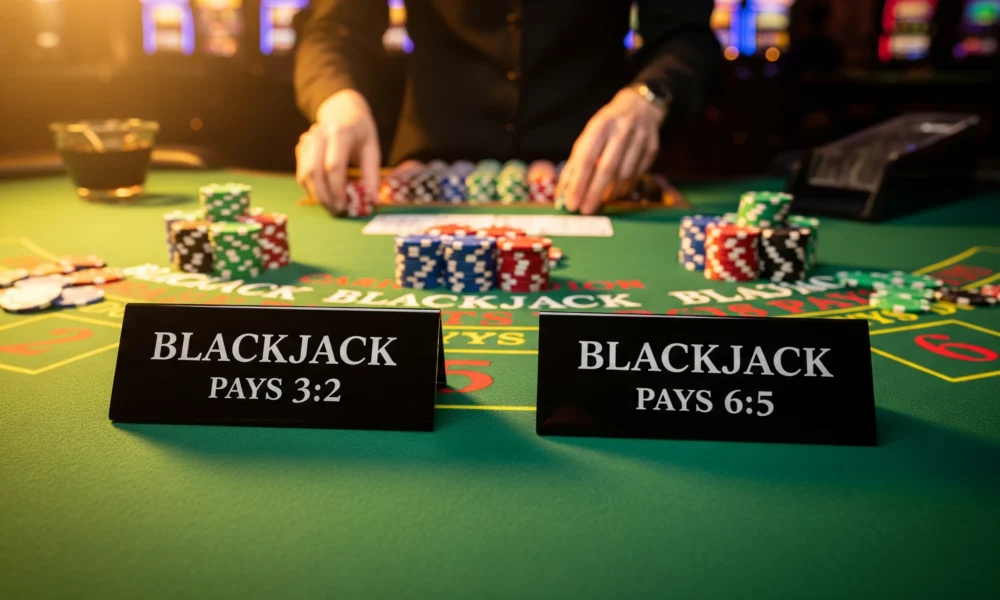
Live dealer tables clearly display rules before you join, but always verify the blackjack payout (3:2 vs 6:5), dealer standing rules (S17 vs H17), and available player options. Some live dealer variants use 6:5 blackjack payouts, which dramatically increase the house edge and should be avoided.
Platform Quality
The best live dealer blackjack platforms invest in HD streaming, professional dealers, and seamless integration between video and betting interface. Poor streaming quality or laggy connections can cause costly mistakes, so test the platform before committing significant funds.
Regional Variants: Asia-Pacific Specialties
Several blackjack variants emerged specifically in Asian markets, incorporating local gaming preferences and cultural elements while maintaining the core blackjack structure.
Free Bet Blackjack
Popular in Macau and increasingly available online, Free Bet Blackjack offers free doubles on 9, 10, and 11, and free splits on all pairs except tens. These free bets are paid by the house rather than requiring additional wagers.
The catch? Dealer 22 pushes against all player hands except blackjack. This single rule compensates for the free betting advantages and maintains the house edge around 1.04%.
Chinese Blackjack (Ban-luck)
This variant developed in Southeast Asian casinos uses specific hand rankings that override standard blackjack totals. A ban-luck (natural blackjack) beats everything, followed by a five-card trick, then a total of 21, then other totals.
The game includes specific hand combinations that pay bonuses, similar to Spanish 21, but with distinctly Asian elements like lucky number combinations and suit preferences.
Super Fun 21
Super Fun 21 offers ultra-liberal rules including doubling on any number of cards, late surrender, insurance paying 2:1 if dealer has blackjack, and automatic wins on player blackjack or six-card 20. The trade-off? Blackjack pays even money unless it’s a diamond blackjack, which pays 2:1.
This variant gained popularity in Asian markets before spreading globally. The house edge ranges from 0.94% to 1.16% depending on specific rules, making it less favorable than classic blackjack despite the liberal playing options.
Comparing House Edges Across Variants
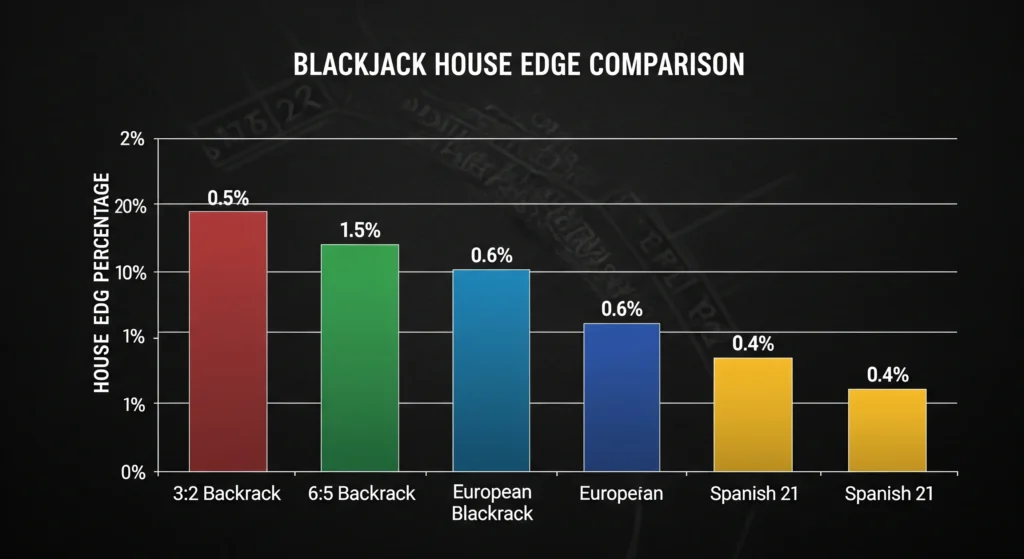
Understanding the mathematical edge for each variant helps you make informed decisions about which games to play. Here’s a comprehensive comparison with optimal basic strategy:
| Variant | House Edge | Key Factors |
|---|---|---|
| Atlantic City | 0.35–0.43% | Surrender, favorable doubling |
| Vegas Strip | 0.35–0.45% | Liberal rules, 4 decks |
| Classic Blackjack | 0.40–0.60% | Standard rules, 4–8 decks |
| Spanish 21 | 0.40–0.80% | No 10s, bonus payouts |
| Pontoon | 0.38–0.62% | Complex strategy required |
| European | 0.62–0.72% | No hole card, limited doubling |
| Blackjack Switch | 0.17–0.58% | Switch cards, even money BJ |
| Double Exposure | 0.69–1.10% | See both cards, dealer wins ties |
| Free Bet | 0.96–1.04% | Free doubles/splits, dealer 22 pushes |
| Super Fun 21 | 0.94–1.16% | Liberal rules, even money BJ |
This table assumes optimal strategy for each variant. Playing without correct strategy increases the house edge substantially, often by 1.5–3% or more.
What the Numbers Mean
A 0.50% house edge means the casino expects to profit RM0.50 per RM100 wagered over the long term. This doesn’t mean you’ll lose exactly this amount—short-term variance creates wins and losses far exceeding the mathematical expectation.
However, over thousands of hands, your results will converge toward the house edge. Choosing a 0.40% variant over a 1.10% variant saves RM0.70 per RM100 wagered, which compounds significantly over extended play.
Popularity Rankings and Why They Matter
Not all variants enjoy equal popularity, and understanding why certain games dominate helps you anticipate which tables will have better betting limits, more active play, and better promotional support.
Top Tier Popularity
Classic blackjack and Vegas Strip variants dominate online and land-based casinos. These games account for approximately 70–80% of all blackjack play globally, which means casinos optimize their offerings, limits, and bonuses around these variants.
The high popularity creates competitive pressure—casinos must offer reasonable odds or lose players to competitors. This dynamic benefits players by maintaining favorable rule sets.
Mid Tier Appeal
Atlantic City, European, and Spanish 21 occupy the middle ground. They’re available at most major casinos but don’t command the same player volume as classic variants.
Casinos sometimes use these mid-tier variants to segment players—offering Atlantic City rules at higher minimum bets to attract experienced players, or promoting Spanish 21 with bonuses to recreational players who enjoy volatility.
Niche Variants
Pontoon, Double Exposure, Blackjack Switch, and various novelty games appeal to smaller player segments. These variants often appear only at larger operators with extensive game libraries.
The limited popularity means less competitive pressure on rules. Operators may use worse rule sets because players choosing niche variants prioritize novelty over optimal odds.
Strategic Implications
Stick to popular variants when possible. The competitive dynamics ensure better rules, more table options, and higher likelihood of finding favorable betting limits. Reserve niche variants for entertainment rather than serious bankroll growth.
Mobile Optimization and Variant Availability
Not all blackjack variants translate equally well to mobile devices, and understanding these differences helps you choose games that perform well on your preferred platform.
Mobile-Friendly Variants
Classic blackjack, Vegas Strip, and European variants work excellently on mobile. The straightforward rules require minimal screen space for information display, and decision-making is simple enough for touch controls.
Live dealer blackjack on mobile has improved dramatically with portrait-mode layouts and optimized video compression, making it viable on smartphones despite the smaller screen.
Mobile Challenges
Variants with complex side bets like Perfect Pairs and 21+3 can feel cramped on mobile. The betting interface needs space for multiple wagering areas, which clutters small screens.
Blackjack Switch is particularly challenging on mobile because you need to view four cards simultaneously and make switching decisions, which requires screen space and mental processing difficult to manage on a phone.
Spanish 21’s bonus payout structure requires reference information that doesn’t fit elegantly on mobile screens, making strategy implementation harder.
Platform Considerations
Some low house edge blackjack sites have invested heavily in mobile optimization, creating dedicated apps or progressive web apps that adapt variant displays to smaller screens. Others simply shrink their desktop interface, creating frustrating mobile experiences.
Test the mobile experience before committing to regular play on any variant. A game that’s enjoyable on desktop might become annoying on mobile, affecting your decision-making and overall experience.
Which Variant Should You Choose?
The “best” blackjack variant depends entirely on your goals, experience level, bankroll, and what you value in the gaming experience.
For beginners: Start with classic blackjack or Vegas Strip. These variants offer low house edges, straightforward rules, and well-established basic strategy charts you can learn easily. The abundance of resources and guides makes learning these games far simpler than complex variants.
For serious players: Atlantic City and Vegas Strip blackjack provide the best mathematical odds when you can find tables with full rule sets. Focus on games offering surrender, favorable doubling rules, and 3:2 blackjack payouts.
For entertainment seekers: Spanish 21, Blackjack Switch, or games with side bets add variety and excitement. Accept the higher house edge as the cost of entertainment, and adjust your bankroll accordingly.
For regional preference: If you learned Pontoon or grew up with European blackjack, playing familiar variants can enhance enjoyment even if the house edge is slightly higher than alternatives. The comfort and confidence from familiarity has value.
For mobile players: Stick to classic, Vegas Strip, or European variants that display cleanly on smaller screens and don’t require complex decision trees or reference materials.
Common Mistakes When Choosing Variants
Players frequently make errors when selecting blackjack variants that cost them money unnecessarily. Avoiding these mistakes improves your results regardless of which games you prefer.
Mistake 1: Ignoring Blackjack Payout Ratio
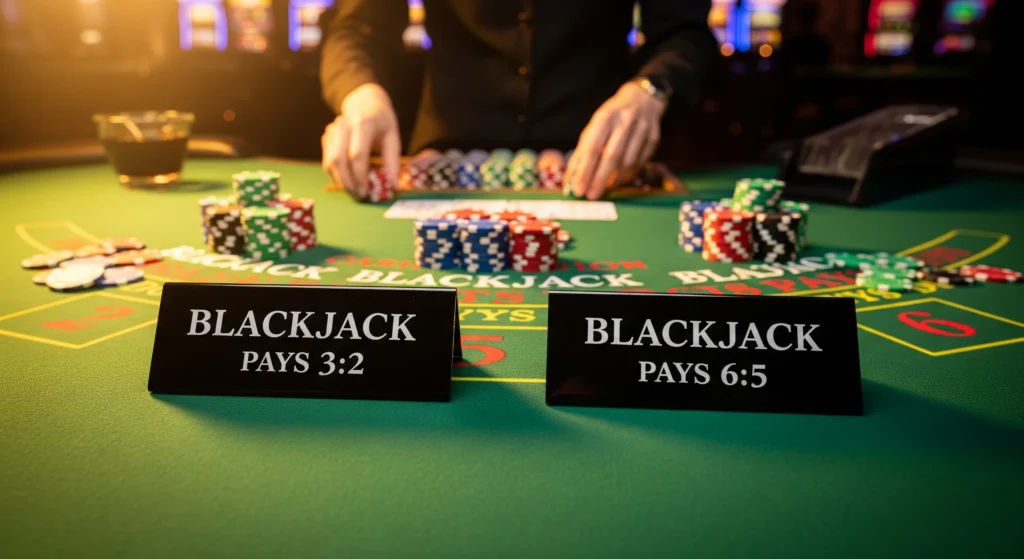
The difference between 3:2 and 6:5 blackjack payouts increases the house edge by approximately 1.39%. This single rule change has more impact than nearly any other factor, yet players frequently overlook it.
Always verify the blackjack payout before playing. If a table pays 6:5 on blackjack, find a different table regardless of how attractive other rules appear.
Mistake 2: Assuming Variants Are Equivalent
New players often treat all blackjack games as interchangeable, not realizing that Spanish 21 requires completely different strategy than classic blackjack, or that European blackjack’s no-hole-card rule changes optimal plays.
Using classic blackjack strategy on Spanish 21 can increase the house edge by 1–2%, eliminating much of your mathematical standing.
Mistake 3: Side Bet Temptation
The 20–35% house edge on most side bets dwarfs the base game’s 0.5–1% edge. Regularly betting RM5 on Perfect Pairs while betting RM25 on the main game means you’re giving up more expected value to the side bet despite it representing only 20% of your total wager.
Mistake 4: Novelty Over Mathematics
Trying new variants keeps blackjack interesting, but permanently switching to a higher house edge variant because it feels fresh costs money over time. Enjoy novelty games occasionally while building your serious play around low house edge options.
Mistake 5: Neglecting Strategy Adjustments
Each variant requires strategy modifications. Playing European blackjack with classic strategy, or vice versa, leads to suboptimal decisions that increase the effective house edge you’re facing.
Invest time learning proper strategy for whichever variant you choose, or stick to one variant until you’ve mastered its optimal play before exploring others.
The Bottom Line: Informed Choice Matters

Blackjack variants offer genuine strategic variety, not just cosmetic differences. The rules, odds, and optimal strategies vary significantly between games, and these differences directly impact your bankroll results over time.
For players focused on minimizing the house edge, Atlantic City and Vegas Strip variants with full rule sets provide the best mathematical foundation. Classic blackjack offers a solid middle ground available at virtually every casino. European blackjack serves players who prefer the no-hole-card format despite the slightly higher edge.
Specialty variants like Spanish 21, Blackjack Switch, and others create different gaming experiences that some players find more engaging. These games remain mathematically defensible when you understand and accept their higher house edges as the cost of added features or volatility.
The worst mistake is playing blindly without understanding what you’re facing. A few minutes researching the specific rules, payout structures, and house edge of any variant saves you money and frustration in the long run.
Whether you’re playing for entertainment, strategic challenge, or profit potential, matching the variant to your goals creates the best possible blackjack experience. Choose deliberately, play with proper strategy, and you’ll get maximum value from whichever blackjack format suits your style.
Once you’ve chosen a variant, the next step is finding a platform that offers it with reliable payouts. See our verified best online blackjack casinos Malaysia 2026 list — tested across multiple blackjack variants and payment methods.
Frequently Asked Questions
Which blackjack variant has the absolute lowest house edge?
Atlantic City blackjack with full rules (late surrender, doubling after split, dealer stands on all 17s) offers the lowest house edge at approximately 0.35% with perfect basic strategy. Vegas Strip rules come very close at 0.35–0.45%. However, these numbers assume you’re playing with flawless strategy—any deviations increase the effective house edge. The house edge difference between top variants is small enough that other factors like table limits, mobile compatibility, and your comfort with the rules should also influence your choice.
Is Spanish 21 better than regular blackjack?
Spanish 21 isn’t objectively better or worse—it’s different. The house edge ranges from 0.40–0.80%, which can be competitive with classic blackjack’s 0.40–0.60% if you use perfect Spanish 21 strategy. However, Spanish 21 requires completely different strategy due to the removal of all 10s from the deck. The bonus payouts and liberal rules create higher volatility, meaning bigger swings in both directions. If you enjoy bonus features and don’t mind learning specialized strategy, Spanish 21 offers legitimate entertainment value. For pure mathematical efficiency, classic blackjack or Vegas Strip variants are simpler and equally favorable.
Do side bets like Perfect Pairs ever make sense mathematically?
No, side bets carry house edges of 2–35%, making them poor mathematical investments compared to the 0.4–1% edge on base blackjack. They’re designed as entertainment features that fund large payouts through unfavorable odds. If you enjoy the excitement of potentially hitting a 30:1 or 100:1 payout, treat side bets as entertainment expenses similar to buying a lottery ticket—spend only what you can afford to lose for the thrill, never as part of a serious bankroll strategy. The expected value is always negative, and no betting system or timing strategy can overcome the massive house edge.
Can I use the same basic strategy for all blackjack variants?
No, each variant requires strategy adjustments based on its specific rules. The differences between classic and European blackjack strategy are relatively minor, but Spanish 21, Pontoon, Blackjack Switch, and other specialty variants need completely different strategy charts. Using classic strategy on Spanish 21 or vice versa can increase the house edge by 1–2% through accumulated suboptimal decisions. Either learn the correct strategy for each variant you play, or stick to one variant until you’ve mastered it. Many strategy charts are available online for free, making this knowledge accessible to any serious player.
Why do some casinos offer 6:5 blackjack instead of 3:2?
Casinos offer 6:5 blackjack because it increases their profit margin by approximately 1.39% without changing any other rules. Many casual players don’t notice or understand the difference, allowing casinos to maintain full tables while collecting significantly more expected profit per hand. The practice is controversial within the gambling industry, with player advocates condemning it as deceptive and casino operators defending it as clearly posted information. As an informed player, always verify the blackjack payout before playing—if it’s 6:5, find a different table or different casino. No other favorable rules can compensate for this massive edge increase.
Is European blackjack more popular in Europe than American variants?
Not necessarily. While European blackjack originated in European casinos, many European operators now offer both European and American-style variants, with player preference split between them. The no-hole-card rule is familiar to European players, but many have learned classic American blackjack through online play and prefer its slightly lower house edge. Casino location matters less than player education—informed players worldwide tend to choose variants based on house edge and rules rather than regional tradition. Some UK and Continental casinos maintain European rules for cultural con
📝 Editorial transparency: Evaluated using our published live casino methodology — our seven-stage evaluation framework with documented test methodology, refresh cadence, and named accountability. Read: How We Test Live Dealer Casinos →






 Malaysia Casino Review4 years ago
12Play Casino Review Malaysia 2026 | Get Casino Bonus | SafeGaming
- Singapore Casino Review4 years ago
12Play Review Casino Singapore 2026 | SafeGaming
- Malaysia Casino Review4 years ago
WinClub88 Malaysia 2026: Login Guide, Bonus & Safety
- Malaysia8 months ago
Best Online Casinos in Malaysia 2026 for Real Money
- Singapore Casino Review4 years ago
BK8 Casino Review Singapore 2026 | SafeGaming
- Singapore Casino Review4 years ago
MYBET88 Casino Singapore Review 2026 | SafeGaming
- Singapore Casino Review4 years ago
Maxim88 Casino Review 2026 | Online Casino Singapore
- Malaysia Casino Review4 years ago
QQClubs Casino Review Malaysia 2026 | SafeGaming