
Types of Blackjack Games Explained (Classic, European, Vegas)


2026 | Reviewed by Casino Gaming Experts
Blackjack’s enduring popularity has spawned dozens of variants, each offering unique rules, payouts, and strategic considerations. From traditional American and European blackjack to innovative formats like Spanish 21 and Blackjack Switch, understanding these differences helps you select games matching your preferences and bankroll while maximizing winning potential.
This comprehensive guide examines the most popular blackjack variants available at both land-based and online casinos in 2026, explaining rule variations, house edge impacts, and optimal playing strategies for each format.
Classic American Blackjack
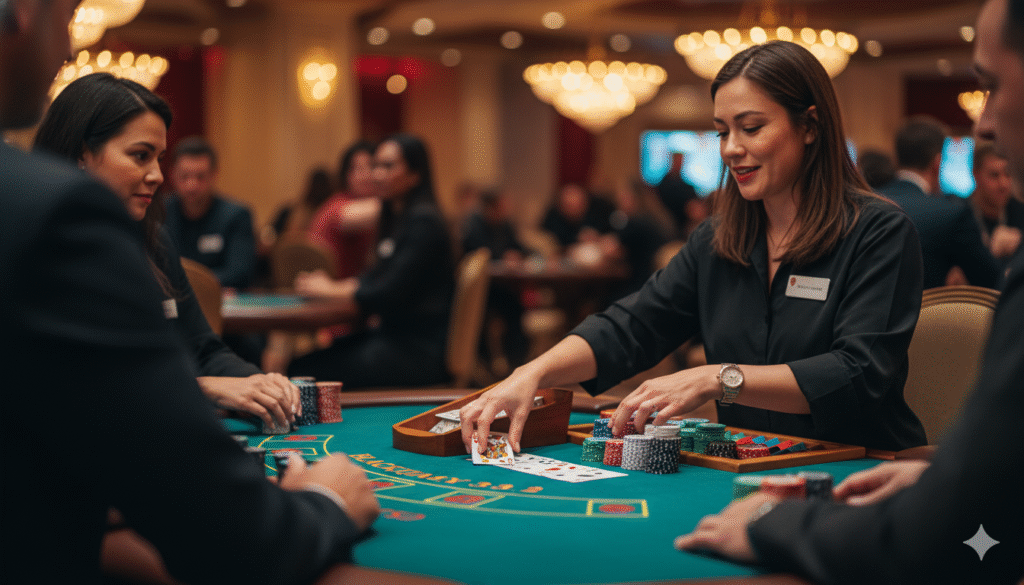
American blackjack (also called Classic blackjack) represents the most widely played variant globally, establishing the baseline rules from which other variants deviate.
Standard American Rules
Core gameplay elements:
- Played with 1-8 decks (most commonly 6 or 8)
- Dealer receives hole card (face-down second card)
- Dealer peeks at hole card when showing Ace or 10
- Player blackjacks pay 3:2 ($15 on $10 bet)
- Dealer stands on all 17s (S17) or hits soft 17 (H17)
- Players can double down on any two cards
- Pairs can be split and resplit
- Late surrender available at some tables
The hole card concept defines American blackjack—dealers check immediately for blackjack when showing Ace or ten, ending the hand before players risk additional money on doubles or splits.
American Blackjack House Edge
With optimal rules (S17, double any two, double after split, late surrender, 6-8 decks), American blackjack offers approximately 0.35-0.50% house edge when playing perfect basic strategy.
Rule variations affecting house edge:
- Dealer hits soft 17 (H17): +0.22%
- 6:5 blackjack payout: +1.39%
- No double after split: +0.14%
- Single deck with restrictions: Variable
Always verify specific table rules before playing.
When to Play American Blackjack
American blackjack suits:
- Players learning blackjack fundamentals
- Those comfortable with standard basic strategy
- Gamblers seeking widely available games
- Anyone valuing the hole card rule protection
This variant provides the foundation for understanding more exotic blackjack formats, making it ideal starting point for newcomers.
European Blackjack
European blackjack differs from American primarily in dealer card distribution and action sequence.
European Rule Differences
Distinguishing characteristics:
- Played with 2, 6, or 8 decks typically
- No hole card: Dealer receives second card AFTER players complete hands
- No peek for blackjack: Players complete actions before discovering dealer blackjack
- Dealer stands on all 17s (including soft 17)
- Split pairs only once (no resplitting)
- Double down usually restricted to hard 9, 10, or 11
- No surrender option generally available
The no-hole-card rule creates the primary strategic difference. When dealer shows Ace or 10, you risk losing splits and doubles if dealer makes blackjack.
European No Hole Card (ENHC) Rule
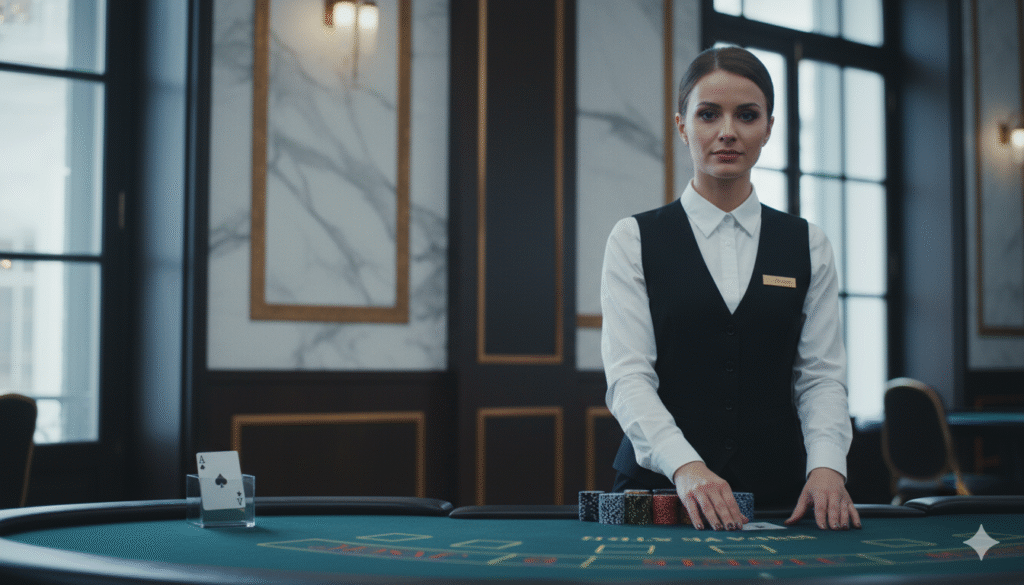
To mitigate the no-hole-card disadvantage, many European blackjack games implement ENHC protection:
ENHC protection: When dealer achieves blackjack, players lose only their original bet, not additional money wagered on doubles or splits.
Without ENHC protection, European blackjack carries substantially higher house edge.
European Blackjack House Edge
Standard European blackjack with favorable rules (S17, ENHC, double on 9-11, 6 decks) typically offers 0.40-0.60% house edge with perfect strategy.
Without ENHC protection, house edge increases approximately 0.11%.
Spanish 21
Spanish 21 offers one of blackjack’s most player-friendly rule sets, compensating for unusual deck composition through favorable gameplay options.
Unique Spanish 21 Features
Revolutionary rule modifications:
- All tens removed from deck (48-card Spanish deck)
- Player 21 ALWAYS beats dealer 21
- Player blackjack always wins (even vs. dealer blackjack)
- Late surrender allowed on any number of cards
- Double down on any number of cards
- Double down after splitting allowed
- Resplitting allowed up to four hands
Bonus payout examples:
- Five-card 21: 3:2 bonus payout
- Six-card 21: 2:1 bonus payout
- Seven-card+ 21: 3:1 bonus payout
- 6-7-8 mixed suits: 3:2 bonus
- 7-7-7 same suit: 2:1 bonus
- 7-7-7 with dealer showing 7: Often 50:1
Spanish 21 House Edge
The tens removal initially creates massive disadvantage—players receive blackjack far less frequently. However, extensive player-favorable rules nearly compensate completely.
Spanish 21 house edge: Approximately 0.40-0.80% with optimal strategy, depending on specific bonus structures.
Spanish 21 Strategy Adjustments
Removing tens dramatically alters optimal strategy:
- Hit more frequently (fewer tens means lower bust probability)
- Double less aggressively (fewer tens reduces double success rate)
- Stand less often on stiff hands
- Surrender more liberally
- Pursue bonus payouts when close
Spanish 21 requires learning variant-specific strategy—standard blackjack basic strategy performs poorly.
Vegas Strip Blackjack
Vegas Strip Blackjack replicates the rules found at most Las Vegas Strip casino blackjack tables in 2026.
Vegas Strip Standard Rules
Typical rule configuration:
- Four decks
- Dealer stands on all 17s
- Double down on any two cards
- Double after split allowed
- Pairs may be split and resplit up to four hands
- No resplitting Aces
- Blackjack pays 3:2
- No surrender
These rules create player-friendly environment with approximately 0.35% house edge when using proper strategy.
Atlantic City Blackjack
Atlantic City Blackjack offers similar rules with minor variations:
- Eight decks (instead of four)
- Late surrender available
- Otherwise identical to Vegas Strip rules
The additional decks slightly increase house edge (+0.08%), but surrender option (-0.07%) nearly compensates.
Blackjack Switch
Blackjack Switch introduces revolutionary gameplay mechanic: playing two hands simultaneously with card-switching privileges.
How Blackjack Switch Works
Unique format:
- Players must bet on two hands simultaneously (equal bet sizes)
- Receive two cards for each hand as normal
- Switch privilege: After viewing all four cards, you may swap the second card from each hand
- Dealer pushes on 22 (instead of busting)
- Blackjack pays even money (1:1) instead of 3:2
Example switching scenario:
- Hand 1: K-6 (total 16)
- Hand 2: 9-5 (total 14)
You can switch to create:
- Hand 1: K-5 (total 15)
- Hand 2: 9-6 (total 15)
Blackjack Switch House Edge
The dealer-push-on-22 rule dramatically increases house advantage, compensating for switching privileges. Even with optimal switching strategy, house edge typically reaches 0.58-0.70%.
Free Bet Blackjack
Free Bet Blackjack has become the most popular blackjack variant in Las Vegas, offering free double downs and splits in specific situations.
Free Bet Blackjack Mechanics
Game-changing features:
- Free double downs on hard 9, 10, 11 (casino provides additional bet)
- Free splits on all pairs except tens (casino provides split bet)
- If you win free bet hands, paid as if you’d made the bet yourself
- Dealer pushes on 22 (compensating for free bet generosity)
Free Bet Blackjack House Edge
The dealer-push-22 rule compensates for player advantages. House edge typically runs 1.04-1.10% with optimal strategy—higher than standard blackjack but offering free betting action.
Many players find the frequent free doubles and splits exciting despite marginally worse house edge.
Multi-Hand Blackjack
Multi-hand blackjack allows playing 2-5 hands simultaneously against single dealer hand.
Multi-Hand Format
Gameplay structure:
- Bet on 2, 3, 4, or 5 hands simultaneously
- Each hand plays independently against dealer
- Same rules apply to all hands
- Minimum bet per hand often lower
- Total action increases proportionally
Multi-Hand Strategic Considerations
Basic strategy applies identically to each hand. However, multi-hand play creates several considerations:
Variance implications:
- Win/loss swings amplify dramatically
- Bankroll depletes faster during cold streaks
- Winning streaks accumulate profits rapidly
- Requires larger bankroll supporting multiple bets
Pace effects:
- Hands per hour increases significantly
- Mental fatigue from continuous decisions
- Higher hourly expected loss despite identical house edge per hand
Perfect Pairs Blackjack
Perfect Pairs adds optional side bet to standard blackjack, wagering that your initial two cards form a pair.
Perfect Pairs Side Bet Structure
Pair categories and typical payouts:
- Perfect Pair (identical cards—same rank and suit): 25:1 to 30:1
- Colored Pair (same rank and color, different suits): 12:1 to 15:1
- Mixed Pair (same rank, different colors): 6:1 to 8:1
The side bet is independent of main blackjack hand.
Perfect Pairs House Edge
Side bet house edges vary significantly:
- Generous paytables: 2.5-4.0% house edge
- Moderate paytables: 5.0-7.0% house edge
- Stingy paytables: 8.0-10.0%+ house edge
Even optimal paytables carry substantially higher house edge than main blackjack bet.
Single Deck Blackjack
Single-deck blackjack uses one 52-card deck, offering the lowest possible house edge when combined with favorable rules.
Single Deck Advantages
Why fewer decks benefit players:
- Increased blackjack frequency
- Greater card removal effects
- Enhanced card counting opportunities
- Approximately 0.48% lower house edge than 8-deck equivalents
Pure single-deck blackjack with 3:2 payouts and liberal rules offers house edges around 0.15-0.17%.
Single Deck Rule Restrictions
Casinos rarely offer pure single-deck blackjack without compensating restrictions:
Common limitations:
- 6:5 blackjack payouts (+1.39% house edge)
- No double after split (+0.14% house edge)
- Restricted doubling to 10-11 only (+0.18% house edge)
Calculate net house edge including all restrictions. A single-deck game paying 6:5 offers worse odds than well-structured 6-deck game with 3:2 payouts.
Choosing the Right Blackjack Variant
Selecting appropriate blackjack variants depends on priorities, experience level, and bankroll considerations.
For Beginners
Recommended variants:
- Classic American Blackjack
- Vegas Strip Blackjack
- European Blackjack (with ENHC)
These standard formats provide solid foundation without exotic rules complicating strategy learning.
For Low House Edge Seekers
Optimal variants:
- Vegas Strip Blackjack (0.35-0.40%)
- Atlantic City Blackjack (0.36-0.40%)
- Spanish 21 (0.40-0.80%)
- Single Deck (if 3:2 payouts maintained)
Focus on games with S17, double after split, surrender availability, and liberal rules.
For Entertainment Seekers
Exciting variants:
- Free Bet Blackjack (free doubles and splits)
- Spanish 21 (bonus payouts)
- Blackjack Switch (card swapping)
- Perfect Pairs (side bet excitement)
These formats sacrifice optimal house edge for enhanced entertainment value.
Avoiding Poor Blackjack Variants
Certain blackjack formats consistently offer unfavorable conditions.
6:5 Blackjack (Any Variant)
The 6:5 payout adds approximately 1.39% house edge, completely negating strategy advantages.
Absolute rule: Never play 6:5 blackjack regardless of other features.
Poorly Structured Variants
Evaluate house edge before playing:
- Spanish 21 with poor bonus structures
- Blackjack Switch without ENHC
- Double Exposure with excessive restrictions
Research specific rule sets using online calculators before committing bankroll.
Online vs. Land-Based Variant Availability
Blackjack variant selection differs dramatically between physical casinos and online gambling platforms in 2026.
Online Casino Variants
Extensive digital selection:
- 10-50+ different blackjack variants
- Multiple RNG versions of standard games
- Live dealer classic and exotic variants
- Exclusive online-only formats
Online platforms provide access to virtually every blackjack variant globally.
Testing Variants in Demo Mode
Most online casinos offer free-play demos of blackjack variants. Use these opportunities to:
- Learn variant-specific rules without risking money
- Practice modified strategy approaches
- Determine which formats match your preferences
- Calculate approximate house edges
Different blackjack variants are available across different platforms — some offer more than others. See which casinos carry the widest range for Malaysian players: best online blackjack casinos Malaysia 2026.
Frequently Asked Questions
What’s the difference between American and European blackjack?
The main difference is the hole card rule. American blackjack deals the dealer a face-down second card and checks for blackjack before player actions. European blackjack deals the dealer’s second card after all players complete their hands, risking additional bets on splits/doubles if dealer has blackjack.
Is Spanish 21 better than regular blackjack?
Spanish 21 offers comparable house edge (0.40-0.80%) despite removing all tens from the deck. Player-friendly rules and bonus payouts compensate for the deck change. It’s “better” if you prefer bonus excitement; regular blackjack is better if you prefer traditional gameplay.
Why should I avoid 6:5 blackjack?
The 6:5 payout adds approximately 1.4% to house edge by reducing blackjack winnings from $15 to $12 on a $10 bet. This single rule makes blackjack nearly unbeatable long-term and worse than most slot machines.
Can you count cards in Blackjack Switch?
Card counting is theoretically possible in Blackjack Switch, but the dealer-push-on-22 rule and switching mechanic complicate traditional counting systems. The game’s unique rules require specialized counting approaches with limited effectiveness.
What blackjack variant has the lowest house edge?
Single-deck blackjack with 3:2 payouts, S17, DAS, and late surrender offers the lowest house edge (approximately 0.08-0.15%). However, such games are rare. More realistically, Vegas Strip or Atlantic City Blackjack with good rules achieves 0.35-0.40% house edge.
Are side bets worth playing?
From a mathematical perspective, no. Side bets carry house edges of 2-10%+, far worse than main blackjack bets. However, if the entertainment value justifies the cost and you budget appropriately, occasional side bets add excitement.
Which variant is best for card counters?
Standard American blackjack with good penetration (70-75% dealt before shuffle) offers the best card counting opportunities. Live dealer blackjack online provides limited counting potential due to shallow penetration (50-60%).
What’s Free Bet Blackjack and is it worth playing?
Free Bet Blackjack offers free double downs on 9, 10, 11 and free splits on most pairs, with the casino funding these bets. House edge is ~1.04%, slightly higher than standard blackjack, but the free betting action attracts players seeking enhanced excitement.
How do I know which variant to choose?
Consider these factors: (1) your experience level (beginners: standard variants), (2) desired house edge (low: Vegas Strip, Atlantic City), (3) entertainment preferences (excitement: Spanish 21, Free Bet), (4) bankroll size (limited: stick to proven low-edge games).
Are online blackjack variants fair?
Yes, when playing at licensed casinos with RNG certification from independent auditors (eCOGRA, iTech Labs, GLI). Reputable online platforms offer provably fair variants matching their stated rules and house edges.
Conclusion
Blackjack variants offer diverse experiences ranging from traditional gameplay to revolutionary formats with unique mechanics. Understanding rule differences, house edge implications, and strategic adjustments enables informed variant selection matching your preferences and goals.
Standard American and European blackjack provide solid foundations with excellent odds and straightforward strategies. Exotic variants like Spanish 21, Blackjack Switch, and Free Bet Blackjack introduce entertainment elements at marginal house edge costs.
Always verify complete rule sets before playing any variant. Prioritize games offering:
- 3:2 blackjack payouts (never accept 6:5)
- Dealer stands on soft 17 (S17)
- Liberal doubling and splitting rules
- Reasonable house edges below 0.75%
Whether pursuing optimal mathematics or maximum entertainment, the diverse blackjack landscape offers variants satisfying every player preference. Experiment with different formats, master variant-specific strategies, and enjoy the strategic depth that makes blackjack casino gaming’s most enduring card game.
📌 Choose your table: See the best online casino Malaysia 2026 for sites offering all blackjack variants — European, Classic, and Live Dealer. Compare fastest payout casino Malaysia for quick cashouts.
📝 Editorial transparency: Evaluated using our published live casino methodology — our seven-stage evaluation framework with documented test methodology, refresh cadence, and named accountability. Read: How We Test Live Dealer Casinos →






 Malaysia Casino Review4 years ago
12Play Casino Review Malaysia 2026 | Get Casino Bonus | SafeGaming
- Singapore Casino Review4 years ago
12Play Review Casino Singapore 2026 | SafeGaming
- Malaysia Casino Review4 years ago
WinClub88 Malaysia 2026: Login Guide, Bonus & Safety
- Malaysia9 months ago
Best Online Casinos in Malaysia 2026 for Real Money
- Singapore Casino Review4 years ago
BK8 Casino Review Singapore 2026 | SafeGaming
- Singapore Casino Review4 years ago
MYBET88 Casino Singapore Review 2026 | SafeGaming
- Singapore Casino Review4 years ago
Maxim88 Casino Review 2026 | Online Casino Singapore
- Malaysia Casino Review4 years ago
QQClubs Casino Review Malaysia 2026 | SafeGaming